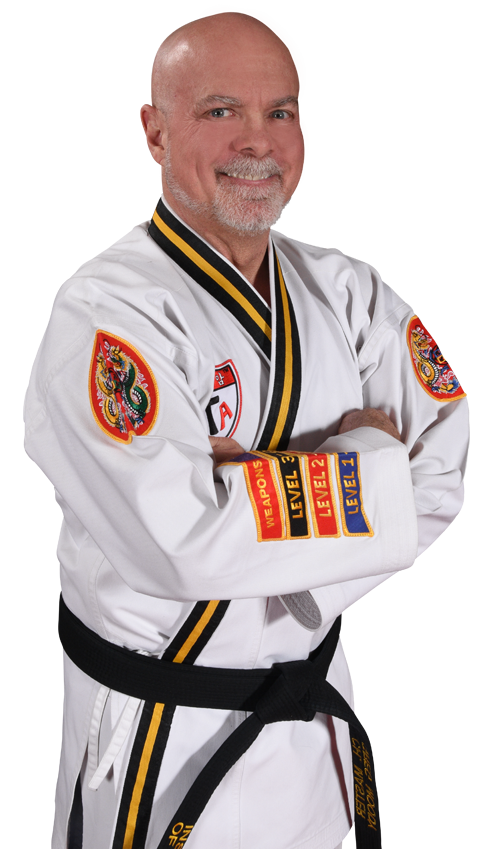
Congratulations
Chief Master
Greg Moody
On Your Go2 Karate Lifetime Achievement Award
Introducing Chief Master Greg Moody
The Go2 Karate Lifetime Achievement Award Recipient
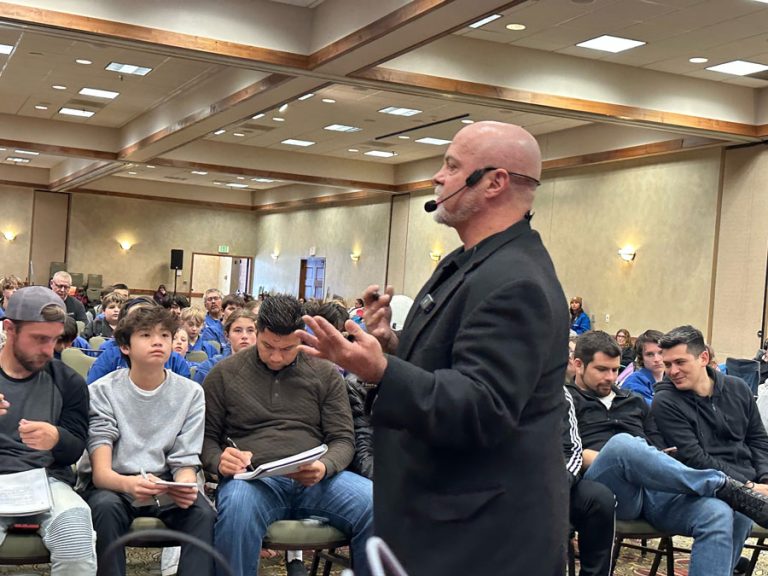

He can also be seen HERE on the Go2 Karate Home Page
He can also be seen in the G2K Recognition Award Wall Of Recipients
To all my fellow Martial Artists,
I have known Greg Moody for many years in the martial arts, and he has worked with us at Go2 Karate for years now. So I want to be honest about my bias before I say anything else. He is a friend. That is not a disclaimer. It is the reason I can tell you what the résumé cannot.
Greg is one of the few people in this industry one can hand a problem to and not think about again. He always delivers.
That sounds like a small compliment. It is not. Most of us have met plenty of talented martial artists. What we have not met a lot of is someone who will take the unglamorous piece, the curriculum nobody wants to write, the parent nobody wants to call, the study nobody had bothered to run in fifty years, and simply do it. Correctly. Without being asked twice.
He walked away from designing satellites because he decided a kid in a dojo was the better use of his life. He has been proving that math ever since, in students, in black belts, in authored books, in consulting with the industry.
Greg, you have made this industry more credible than you found it. You have changed the lives for so many people and for that the industry is grateful.
Congratulations, and thank you.
Tracy Lee Thomas
8th Degree
Go2 Karate Recognition Board Member
Founder | Go2 Karate

Lifetime of Legacy
Add your voice to celebrate the award and the man behind it. We invite you to leave a congratulatory note for Dr. Mark Shirley in honor of his Go2 Karate Lifetime Achievement Award. Whether you are a student, an instructor, or part of the martial arts industry, your words of recognition and celebration are welcome. Share your message and join the community in honoring his lasting impact.
This award is truly well deserved.
I have known Chief Master Moody, Ph.D. for over 20 years. Throughout that time, I've seen firsthand the knowledge, passion, humor, and genuine compassion he brings to everything he does. His contributions to martial arts are incredible, but his influence extends far beyond the studio.
Chief Master Moody has dedicated his life to helping people grow, overcome challenges, and become better versions of themselves. His counseling background gives him a powerful way to make a difference. Combining that insight with decades of martial arts experience, he helps children, families, educators, and communities address bullying, conflict, confidence, and personal growth.
His accomplishments speak for themselves. He is an 8th-degree black belt, Chief Master Instructor, accomplished author, and researcher who has helped thousands of students achieve their goals. His doctoral research connected martial arts training with improved self-esteem in children, and his anti-bullying work has reached schools nationwide.
If I had to pick one quality that sets him apart, it's his generosity. His generosity is unparalleled. He has donated over $100,000 to schools and disaster relief, provides scholarships for families in need, and regularly gives his time and expertise to communities without expecting anything in return. After two decades, I can say without hesitation that this recognition goes far beyond accomplishments or titles. It honors someone who consistently uses his success to help others.
That is what makes this award so fitting. Chief Master Moody has spent his career making a difference, and I am proud to have witnessed that commitment for more than 20 years.
Denise Morin
5th Degree
Go2 Karate Recognition Board Member
Go2 Karate Editor

An Interview With Chief Master Greg Moody - Go2 Karate Lifetime Achievement Award Winner
Conducted by Go2 Karate Magazine
Interview Highlights:
Go2 Karate:
Hey everybody! Today we honor a rare kind of career. Chief Master Greg Moody began as a rocket scientist, an aerospace engineer, before spending his life on the martial arts floor. He is the founder of KarateBuilt Martial Arts, an eight-time school of the year, and a teacher who has guided more than 18,000 students, promoted over 1,800 to black belt. He also holds a PhD in education and works in psychology. He has written 20 books, built a nationally recognized bullying prevention and conflict resolution program, and advises school owners across the country. But the reason we are here is simpler than any resume. For decades, he has made people better.
Chief Master Moody, I want to welcome you and congratulations on receiving the Lifetime Achievement Award.
Chief Master Greg Moody:
Well, thank you so much. It's an honor. There are so many amazing people who've gotten the Lifetime Achievement Award. It's hard to put myself in the category of some of those guys. Friends of mine call me schizophrenic because I do so many different things, so it's either I worked in a lot of areas or I'm schizophrenic from all the different things I've done.
Go2 Karate:
ADHD sounds better than that, sir.
Chief Master Greg Moody:
Maybe ADHD. Yeah, it's an unusual thing. I'm weird in the industry having the technical background, like the engineering background, and then the psychology background and all this other stuff. I think everything fits together in helping me make people better and helping me build my school and help my students the best way that I can.
Go2 Karate:
Along those lines, when someone meets you, how do you actually define yourself in one breath as opposed to a five-minute dissertation?
Chief Master Greg Moody:
Somebody asked me that the other day, what do I do for a living? I'm said, "Oh, geez, I have five different things I do." I have my martial arts school, I have a small psychotherapy practice, I work with Martial Arts Wealth Mastery, and my main work is helping martial arts school owners grow their business through Go2Karate. To me, it all fits together in a cool way.
If it's somebody I'm just meeting, I say, "Well, I work in the martial arts business," and that's usually enough. If it's a friend or someone I know better, I give them the whole spiel.
Go2 Karate:
Okay. Well, let's do this. How about you take us back to the very beginning? What first made you get on the mat and then stay? Because you've been in it for 30 years. What's the background on that?
Chief Master Greg Moody:
I've actually been in martial arts pretty close to 40 years. My schools have been around 30 years. I started in '88, so that's 37 years now. My story I think is illustrative for a lot of people that own martial arts schools, because I originally wasn't seeking out doing martial arts. A friend of mine wanted to do it at the gym I was training at, and I was lifting weights and doing exercise. They said, "Hey, they're doing a taekwondo class. You want to go do that?" I'm like, "Not really," but they talked me into it. So, I went and did it, and at that point, fell in love with it.
I wanted to do everything I possibly could to be part of it, the uniform, the next belt. It didn't take much to get the bug. I tease martial arts school owners all the time in seminars. I say, "You guys are the mutants." They love martial arts so much that if the instructor said, "Do knuckle pushups in the gravel," they'd do it.
I think that's illustrative for a lot of our school owners. They get worried about somebody who comes in and maybe they're not super gung-ho about doing martial arts. Maybe they're coming in with their spouse and the spouse wants to do it. If that friend hadn't talked me into it that day, I wouldn't be here. So, it's important to know that people don't always start out that way, even people like me who ended up crazy about martial arts.
Go2 Karate:
Very true. I started personally because my son wanted to do something with me. Same as you, that wasn't something that initially drew me in, and then 20 years I did it.
Chief Master Greg Moody:
I thought I was going to have a career as an engineer and just keep on doing that. At that time, I'd started my master's degree in counseling too, so I was going to be an engineer until I finished my PhD in counseling psychology, and then I was going to be a psychologist. Martial arts wasn't anywhere in that plan as a career, and it's been transformational to do it. A lot of people don't start out with the interest. That's why we have to be good at marketing and sharing this stuff with people.
Go2 Karate:
It sounds like your career path actually did lead you down to the martial arts path, because you have to be very aware psychologically of your students, of the parents' needs, the students' needs.
Chief Master Greg Moody:
Yeah, I feel really lucky I had these interests early on. I wanted to be an engineer initially, did work for NASA, satellites and rockets. I didn't leave that because I didn't like it. I liked it, but I also wanted to do some work with people, and that led me to psychology, while I started this martial arts thing in parallel. My school is run as a system, and that's what I try to help people do. It'd be hard, if I hadn't come from that engineering background, to put together the systems that I put together. Of course, I also learned from great people, Grand Master Bill Clark, Grand Master Stephen Oliver, Grand Master Sergio Von Schmeling.
That makes my school easier to run and higher quality for my students. The psychology helps me get a much deeper understanding of people's motivations, and how to help them when they're having anxiety, maybe going to a tournament, maybe having issues in regular life. My education degree is obviously helpful in teaching too. It sounds weird when you tell people what my college degrees were, three totally different things, but for me it all fits together.
Go2 Karate:
Let me ask you this. How does the knowledge that you have allow you to teach your staff to have all the knowledge that you do?
Chief Master Greg Moody:
That's a really good question. Historically in martial arts, you trained, you got your black belt, and that made you a teacher. But that doesn't give you any skill to be a teacher, just like a college degree doesn't mean you can go teach that subject. There are people skilled at their martial arts, and then there's people skilled at being instructors. In our business, a lot of times it's just trial and error and the good ones sort of get left over, so I wanted a good system for teaching.
I'm in the ATA, and they started out with a really good system, so I had a good foundation. What I realized also is it's a different skill to be a teacher of teachers. One skill is having martial arts mastery. Another is teaching it well. And another is teaching the people who teach. A lot of instructors are pretty good at teaching their students, but when they try to get their staff to do things right, like answer the phone or run a class, they hand them a script, talk to them a couple minutes, and then get mad when it's not done well.
Two things go wrong. School owners don't have good processes written down. In my school, we have a class planner for everything, and I spend my Monday staff meeting training on it. The second thing in the training order is backwards. Take answering the phone. When we listen to people's calls, it's really bad, because school owners rush straight to every possible objection instead of drilling the basic script first. Train without objections, then add common questions, then finally the back and forth of complex issues. Most people skip that order, so they never really learn.
It's the same in martial arts. When somebody walks in the first day, we don't punch them in the face on lesson one. They learn some movements, hit a pad for a while, and only later learn to defend against a punch or a kick, adding conflict gradually. If you flip that around and load in too much conflict from the start, it's very hard for people to learn.
Go2 Karate:
You're saying we have to learn the basics before we can get to an advanced kick, in essence?
Chief Master Greg Moody:
Well, yes, and learn the basics without challenges first. That's how education ought to work too. Kids should master one concept before adding the next. What happens in schools is everybody works on a topic for a week regardless of mastery, which assumes everybody learns at the same rate, and that's impossible. Whether it's martial arts or business, it's the same thing.
Go2 Karate:
You've mentioned conflict several times, and you've built a real bullying prevention program. What do most parents and schools get wrong about bullying, and what actually works?
Chief Master Greg Moody:
Bullying was my main topic for my PhD, along with martial arts. The dissertation showed that martial arts is better at helping kids prevent being bullied than any other school-based bullying prevention program, one of the only studies I know of with real academic data behind it. I wrote a book on it too, Bullying: Truth, Myths, and What To Do!
If I ask a group why kids bully, almost everybody says low self-esteem. Our research shows that's not true. Kids who bully have average or better than average self-esteem. They bully because it helps their social status, it makes them the alpha kid, and without other influences that continues, whether at school or later at a job with an imbalance of power over them.
There are three things that define bullying. It's intended to hurt, usually repeated over time, and there's an imbalance of power. Two kids fighting over a toy, same age and size, that's conflict, not bullying. One study out of Canada showed elementary teachers only catch bullying about 5% of the time, because it's barely taught in education programs. Repeated hurt with a power imbalance also describes abuse, like a spouse who can't leave because they'd be broke. You can't solve that with a sit-down conversation, because it doesn't fix the imbalance of power.
For bullying, we need ways for kids to get out of the situation and feel okay asking for help, and we need to educate teachers and parents. The Go2Karate Bullying Prevention Seminar covers that. And then there's violence, which is its own category. Most martial arts schools don't even define what violence is. Legally, it's when you're in danger of serious injury or death. We teach that on day one. Who do you hit? A bad guy, somebody trying to hurt you. Everything else in karate, the respect, the discipline, applies to their whole life. If there's conflict, they know how to resolve it. If there's bullying, they know how to handle it. If there's violence, they know what that is and that they have the right to protect themselves.
Go2 Karate:
Have you seen a child whose life was changed once they learned how to stop being bullied?
Chief Master Greg Moody:
Yes. Bullying is a complex problem, and people want simple solutions, like the movie where the kid finally beats up his bully, and it's over. In real life, the bully comes back the next day, maybe with friends, because the imbalance of power hasn't changed.
What actually changes it is when parents get involved and are supportive, and kids build enough confidence over time that the imbalance goes away, not because they could win a fight, but because of who they've become as a person.
We have students write an essay every time they test for first through fourth degree black belt, and we hear stories, sometimes we didn't even know a kid had been bullied. By black belt it's stopped. Our study also asked parents and white belt kids separately whether the kid was being bullied, across 17 states and hundreds of students. Twenty-seven percent of kids self-reported being bullied. Only about 10% of parents thought so, roughly three times as many kids as their parents knew about.
Go2 Karate:
Where can people find your books?
Chief Master Greg Moody:
Search Amazon for Greg Moody or go to drgregmoody.com. I just finished one on our KarateBuilt charter too.
Go2 Karate:
What is your philosophy?
Chief Master Greg Moody:
For years I heard people talk about mission statements and thought that stuff didn't really have an effect. Then I went to my son's graduation at Arizona State, and they have a charter that was genuinely inspiring, so I wrote one for us. My instructors carry a metal card with it in their wallets, and it guides everything we do, teaching, the business, all of it.
It has three lines. “KarateBuilt is a highly disciplined martial arts school. We measure results not on who we exclude, but on students' constant growth from the moment they start to black belt and beyond. KarateBuilt black belts take responsibility to lead with integrity.”
Discipline comes first, before a form or a kick, a class has to be structured, even for three-year-olds. Growth means we move each student from wherever they're at, whether that's a student with autism, a disability, or an adult with an injury, to the next step for them, rather than favoring one mold, like a school overly focused on tournaments. And integrity means when you leave the school, you're still a black belt. My senior instructor Laura Sanborn is my number one student at the school, and she’s been running it for many, many years. I’m Chief Master Moody, and she’s Senior Master Sanborn—we still address each other the same way outside the school as inside it.
Go2 Karate:
Who was your mentor, and what did you gather from them?
Chief Master Greg Moody:
I have so many people I'd credit. My instructor, Chief Master Mark Copley, is where I learned to do martial arts, and everything we do comes from him. Above him in the ATA, Eternal Grand Master H.U. Lee, and I've trained with several of the Lee grand masters since. Grand Master Clark has been a massive influence too, caring about the martial arts being done really well and having high standards. Grand Master Stephen Oliver and Grand Master Jeff Smith are very caring individuals who know how to run a business and also want people to be great martial artists.
And Grand Master Michael Caruso, I wouldn't have a school if it wasn't for him. My old school was in an industrial park, tile floor with chunks out of it, mirrors cracked from sparring people into them. He invited me up to his school in Pittsburgh, and it was so professional that I thought, this could actually be something I do for a living. Six months later I had my own location up and running.
Go2 Karate:
What are you most proud of as a martial artist?
Chief Master Greg Moody:
The first thing that comes to mind is my son. He was diagnosed with autism at three. He couldn't talk; he'd speak in gobbledygook. When it came time to start him in class at three, I remember thinking maybe he can't do this, and then it struck me that I'd be a massive hypocrite, since we tell everybody else we'll work with them. So, I started him.
My instructors taught him and didn't treat him any differently because he was my kid or because he couldn't talk.
I remember him getting his orange belt, standing up, and saying, "Yes, sir." That was the first clear English I'd heard him speak. I knew that was life-changing, that a kid I might have thought wasn't capable was absolutely capable. Eventually he went into Leadership, where you have to talk and teach other people, and he was one of the instructors' favorite kids. He went on to be captain of his football team, an all-state player, and he did standup comedy, better than I did when I tried it. He graduated college with a great GPA, and now he's 24, has a good job, pays his own bills. I think all of that came from martial arts, and we have story after story like it.
Go2 Karate:
That's an amazing story about your son. Let me ask this. We have readers out there looking to start schools, or who've just started one. What one piece of advice would you give them?
Chief Master Greg Moody:
A couple things. First, it's negligent in our industry that people are just getting by. There's no reason you can't run a martial arts school and make a really good six figure income for yourself, and that comes from incredibly good student service and teaching really good martial arts. But 98% of the industry doesn't do that well. It's okay to just get by, but it doesn't need to be that way.
Second, I had to piece together systems from 25 different mentors myself, learn to answer the phone from one guy, a couple kicks from another, and cobble it into something cohesive. That doesn't work well. My advice is to get one mentor with a whole working system and stick with it, whether that's Go2Karate for marketing or Martial Arts Wealth Mastery for business systems, or somebody else. And make sure whomever you pick has had success across multiple schools, because one school is a sample of one, and that's not a statistic that tells you the system is repeatable.
Go2 Karate:
I do have one last question for you. What does this award mean to you? When you found out you were getting it, what were you thinking?
Chief Master Greg Moody:
Honestly, the first thing that came to mind was imposter syndrome. I feel well-respected in the industry, but some of the guys who've gotten this award are legends, and it's hard to feel like I belong in that category yet. I wanted to put that aside and just be happy and proud to be talked about alongside those giants. I want to stay humble, but also let myself be a little proud, because that's pretty amazing.
Go2 Karate:
You're always very humble, sir, and I appreciate that about you, having known you for as long as I have. I also want to thank you for your time and everything you've shared for our readers who are on this path. I appreciate it. Thank you.
Chief Master Greg Moody:
Well, thank you. I really appreciate the honor, it's a big deal, and I thank you very much for your time.