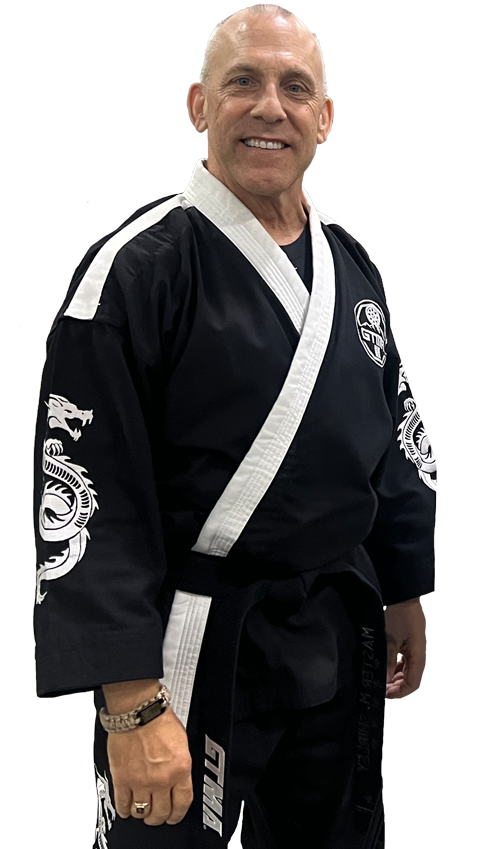
Congratulations Dr. Mark Shirley
On Your Go2 Karate Lifetime Achievement Award
Introducing Dr. Mark Shirley
The Go2 Karate Lifetime Achievement Award Recipient
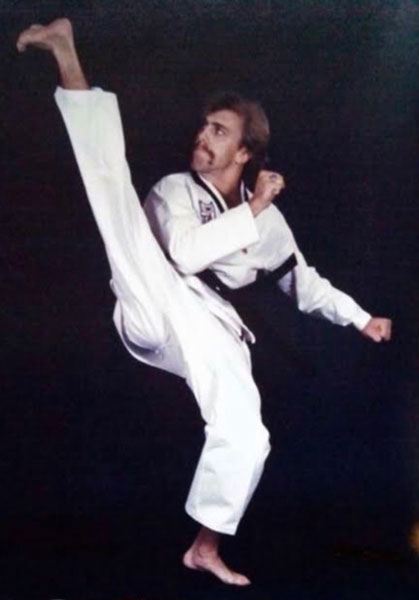
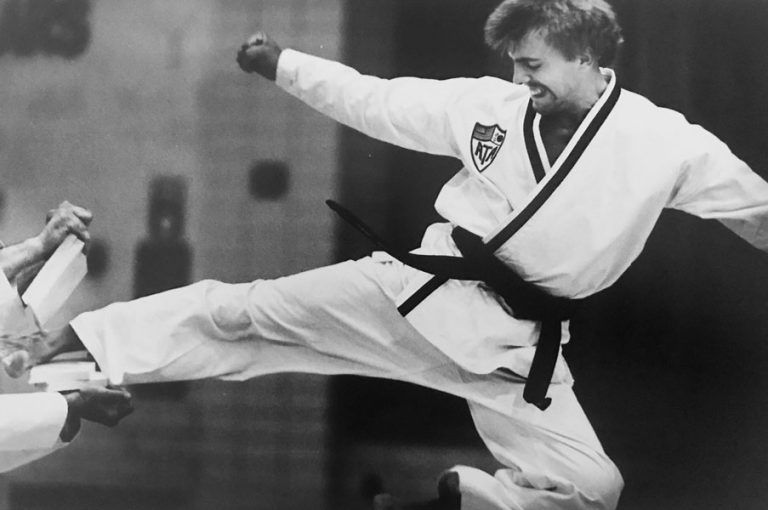
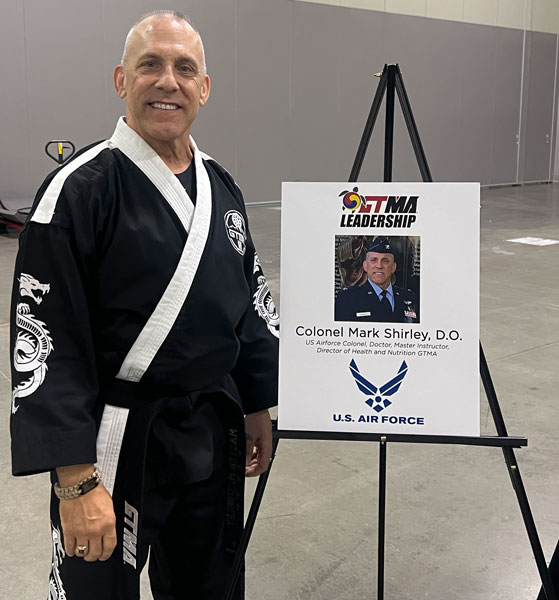
He can also be seen HERE on the Go2 Karate Home Page
He can also be seen in the G2K Recognition Award Wall Of Recipients
To all my fellow Martial Artists,
The Go2 Karate Lifetime Achievement Award is proudly presented to Dr. Mark E. Shirley in recognition of a lifetime dedicated to excellence in medicine, military service, martial arts, leadership, and mentorship. Throughout a distinguished career spanning more than four decades, Dr. Shirley has demonstrated an unwavering commitment to serving others while achieving extraordinary success in multiple disciplines. His impact has been felt not only in the lives of his patients and students, but also throughout the martial arts community and beyond.
As a dual board-certified Osteopathic Sports Medicine Physician, emergency medicine practitioner, and internationally respected ringside physician, Dr. Shirley has devoted his professional life to protecting and enhancing human performance. His work with amateur and professional combat athletes, collegiate sports programs, and world championship boxing events has earned him widespread respect as a leader in sports medicine and athlete care.
Dr. Shirley’s service to his country is equally remarkable. After an exceptional 35-year military career, he retired as a Colonel in the United States Air Force, where he served in key leadership positions including Flight Surgeon and State Air Surgeon for the Nebraska Air National Guard. His military accomplishments reflect the same integrity, discipline, and dedication that have defined every aspect of his life’s work.
A lifelong martial artist and 6th Degree Black Belt Master in G-Shim Taekwondo, Dr. Shirley has spent nearly five decades training, teaching, and mentoring others. Through his leadership within Global Traditional Martial Arts and his countless contributions as an instructor, school owner, mentor, and volunteer Sports Medicine Physician, he has helped shape the next generation of martial artists and leaders. His commitment to character development, fitness, nutrition, and personal growth continues to influence students at every level.
On behalf of Go2 Karate Magazine and the martial arts community, we proudly congratulate Dr. Mark E. Shirley on receiving the Go2 Karate Lifetime Achievement Award. His extraordinary legacy of service, leadership, and excellence serves as an inspiration to all who have had the privilege of learning from, working with, and being guided by him. This recognition celebrates not only a lifetime of achievement, but a lifetime of making a meaningful difference in the lives of others.
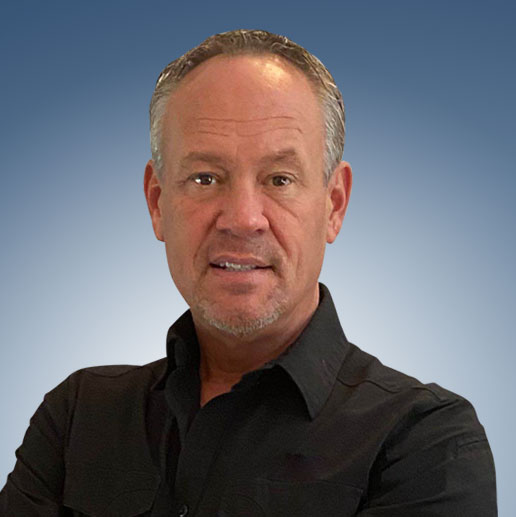
Tracy Lee Thomas
8th Degree
Go2 Karate Recognition Board Member
Founder | Go2 Karate
Lifetime of Legacy
Add your voice to celebrate the award and the man behind it. We invite you to leave a congratulatory note for Dr. Mark Shirley in honor of his Go2 Karate Lifetime Achievement Award. Whether you are a student, an instructor, or part of the martial arts industry, your words of recognition and celebration are welcome. Share your message and join the community in honoring his lasting impact.
Dr. Mark Shirley has always been someone I have looked up to and deeply respected. His remarkable achievements in medicine, military service, and martial arts are matched only by his humility, generosity, and commitment to helping others succeed. Congratulations on receiving the Go2 Karate Lifetime Achievement Award—few people are more deserving of this recognition than you.
Congratulations. This honor is so well deserved.
With respect ,
Denise Morin
5th Degree
Go2 Karate Recognition Board Member
Go2 Karate Editor

Some people achieve success in a single field. Dr. Mark Shirley has dedicated his life to excelling in several while never losing sight of what matters most—serving others. Whether as a physician, Air Force Colonel, martial arts master, mentor, or educator, Mark has consistently led with humility, integrity, and a genuine desire to help people reach their full potential. His accomplishments are extraordinary, but those who know him best understand that his character, generosity, and willingness to give his time and expertise are what truly set him apart.
It is an honor to recognize Dr. Mark Shirley with the Go2 Karate Lifetime Achievement Award. His impact can be measured not only by the lives he has touched through medicine, military service, and martial arts, but also by the countless people he has encouraged, guided, and inspired along the way. Mark's legacy is one of leadership, service, and excellence, and this award is a fitting tribute to a lifetime spent making a difference.
Respectfully,
Greg Moody
8th Degree
Go2 Karate Recognition Board Member
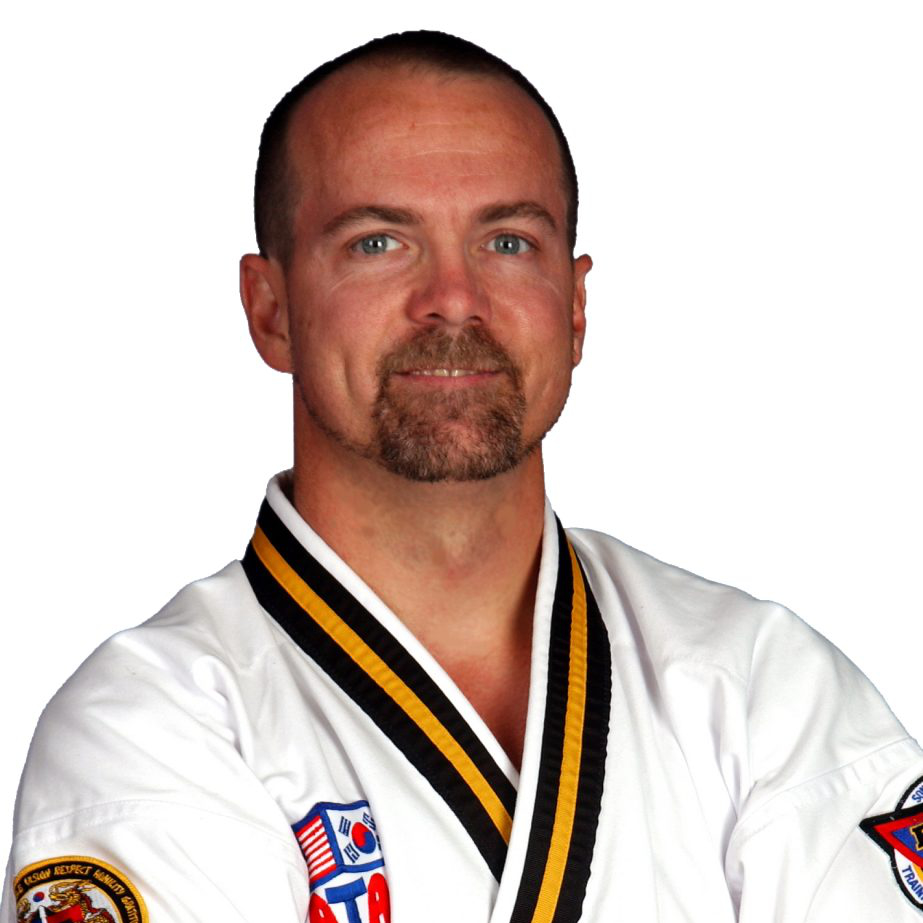
An Interview With Dr. Mark Shirley - Go2 Karate Lifetime Achievement Award Winner
Conducted by Dr. Greg Moody, Chief Master, Go2 Karate Magazine
Interview Highlights:
Go2 Karate-Dr. Greg Moody:
Thanks a lot for being here today for our interview with Lifetime Achievement Award recipient, Dr. Mark Shirley. He's a 6th Degree Black Belt Master Instructor, a competitor, and an M.D., a Doctor of Osteopathic Medicine. He spent many years in the military, retired this past August, and has worked as a fight doctor for hundreds, if not thousands, of fights across the country. He's been featured in plenty of magazines and has been part of eleven world championships. We're genuinely excited to have you. Thanks for being here. Can you tell us a little about how this all started for you?
Dr. Mark Shirley:
Thanks for inviting me. It's a pleasure and an honor to be here. It started back when I went into the military. I went into Navy bootcamp in 1985. I spent twenty years in the Navy Reserves, ten as an enlisted hospital corpsman and ten as a physician officer, all with a fleet hospital unit that supported the Marine Corps. That's where my military career and my military medicine career both began.
I got out after twenty years, and five years later the Air Force came after me with a flight surgeon position, which is funny because that's exactly what I'd wanted from the Navy in the first place. I had a buddy who was an F-14 flight surgeon, and I'd gone to a Navy recruiter once and said, "I'm looking for flight surgery for the Reserves." He told me they had no need for reserve flight surgeons. I said, "You do, you just don't know it yet." Turns out I was right; it just took the Air Force to prove it.
So, I got out of the Navy, the Air Force brought me back in as a lieutenant colonel for flight surgery training. I made full colonel and became head of aerospace medicine for the Nebraska Air National Guard. When I made colonel, I also became what's called the state air surgeon, which is the chief medical liaison for the state, the connection between the Guard's medical side and the general in command.
It's a role that puts you in the room for decisions that affect every airman's medical readiness across the state, not just the people you see in clinic, and it gave me a perspective on military medicine I wouldn't have gotten any other way.
The whole time, I was also in the martial arts. I started in 1979, came up through the ranks as a competitor regionally and nationally, and made the national top ten in 1987 with the American Taekwondo Association. I ran clubs in South Omaha while I was studying exercise science. That's really where military medicine, martial arts, and sports medicine all came together for me, right around the time I was finishing up my exercise physiology studies and still competing.
I went to medical school from 1990 to 1994. During that stretch, the director of exercise science at Creighton University, who wrote the sports performance series for the National Strength and Conditioning Association, approached me about doing a biomechanical analysis of a martial arts skill.
I gathered my sources, did the research, and published what was, at the time, considered the first formal biomechanical analysis of a martial arts skill, a Taekwondo side kick. It ran in the NSCA Journal, which goes out to forty countries, and I was on the cover. That opened a lot of doors I hadn't expected.
A couple more articles followed in sports medicine textbooks, and I've stayed involved in sports medicine in one form or another ever since, all the way through medical school and into practice.
I was team physician for the University of Nebraska Omaha for twenty years. In the early 2000s, a friend of mine, an orthopedic surgeon who did a lot of ringside work and served as cut man for world champion Terence "Bud" Crawford, pulled me into regional amateur and professional MMA ringside work, as well as some amateur boxing.
Once Crawford hit world champion and started bringing fights to Omaha, I started working those championship cards as well, and that relationship just kept growing from there.
To date I've covered more than 4,000 professional and amateur MMA fights as a fight physician, over a hundred UFC fights as ringside physician, and ten world championship fights as chief ringside physician for Crawford, who just retired last summer as the number one boxer on the planet. It's been a privilege to be in that corner for that stretch of his career.
Go2 Karate-Dr. Greg Moody:
Wow! How does all of that tie together? You mentioned the 3Ms when we talked before. How does it all fit into your life?
Dr. Mark Shirley:
I've always introduced myself as a 3M kind of guy: military, martial arts, and medicine.
As a flight surgeon taking care of air crew, and earlier as a field surgeon with the Marine Corps back in the '80s and '90s, you're looking at operational medicine, the military athlete, someone whose body has to perform under conditions most people never face.
From there it's a short step to sports medicine and working with martial artists, professional athletes, collegiate athletes. My private sports medicine practice, my work as an emergency medicine physician, and my time in a sports medicine clinic all let me take care of those athletes in different settings, sometimes the same athlete in three different settings depending on the week.
All three pieces have tied together into one career, and it's been a good combination.
Go2 Karate-Dr. Greg Moody:
It's very unique, being able to see things from that many angles. I imagine the military alone covers a huge range of people and situations. There aren't many bases you don't touch in some way. Tell us more about how you got started in martial arts and what it's meant to you.
Dr. Mark Shirley:
I started around 1979. My brother was into Taekwondo, and a couple of friends were too, and that sparked my interest. I made Black Belt in 1981, then 2nd, 3rd, 4th Degree, working my way up steadily over the years.
I held 5th Degree for twenty-six years, from 1995 to 2021.
I had no real interest in testing again. I was happy with where I was. I'd run schools in South Omaha, had a commercial school with Grand Master Alan Pepin, a retired chief of police with the Omaha Police Department, as my partner.
I was deep into sports medicine and ringside work by then, and frankly I figured my competition days and my testing days were behind me.
But the guys I'd come up with back in the early '80s, competing individually, Grand Master Dan Longoria, who runs a school in Lincoln, Grand Master Todd Droege down in Marietta, Georgia, and Grand Master Steve Westbrook down in Florida, had all stayed active with the organization while I went off to medical school.
I trained the whole time but was never tied to a formal organization, just training on my own schedule, around my own life. Eventually it came full circle, and they reached out about a new organization, asking if I wanted to join.
I told them, "I've got this going on and that going on. What if I come in as your sports medicine doc, director of fitness and nutrition, whatever you want to call it? I can be the eyes and ears that brings something different, something not many organizations have."
I felt I had something unique to offer, something most schools just don't have access to.
Grand Master Longoria, an 8th Degree at the time and about to test for 9th, told me Grand Master wanted me to test for 6th Degree. I said I was good; I didn't need another plaque on the wall. He said testing was in July. I said, "Yes, sir."
I wrote out a game plan and a training program, tested for 6th Degree, made Master, and here we are.
Go2 Karate-Dr. Greg Moody:
So how are you putting your medical knowledge to use for martial artists? What would you tell our readers that they might be missing, based on everything you've seen?
Dr. Mark Shirley:
It's about the whole biopsychosocial picture: body, mind, and soul. We have some of the best martial artists in the world in our organization, so that aspect's covered. Discipline's covered too.
What I'm pushing on is the daily piece, proper health and nutrition, attacking that every single day, building a genuinely functional lifestyle, the part that doesn't show up on a scorecard but shows up everywhere else.
For our school owners and the people who practice this, martial arts aren't three, four, five hours a week of training, it's a way of life. There's 168 hours in a week, and we have to think about all the time outside the mat, because that affects daily life just as much as anything that happens during a class.
We have Chris Hansen, who runs Impact 168, handling the lifestyle side for our licensees, getting them goal-seeking and setting real short and long-term goals as school owners. Not just business goals but personal health goals too.
Our Grand Master, G.K. Lee, wants us practicing well into our later years, and you can't do that on a bad diet. World-class training with crappy fuel is like putting bad gas in a Cadillac body.
You can have the best engineering in the world under the hood, but if you're running garbage through it, you're not getting where you want to go. Everything has to be on the same page.
That's what I'm trying to bring into the GTMA organization, the whole biopsychosocial wheel, so the whole martial arts athlete is covered, not just the parts that show up on the mat.
Go2 Karate-Dr. Greg Moody:
How's that gone so far, in terms of getting it implemented?
Dr. Mark Shirley:
Very well. I gave my first presentation at our inaugural national camp back in May 2021 and have given a number since then, including some over Zoom when I couldn't be there in person because I was working an ER shift that weekend.
The response has been good, people actually show up and ask questions afterward, which tells me it's landing. I'm doing another presentation at Globals in July, in Little Rock, Arkansas.
Go2 Karate-Dr. Greg Moody:
How often do these folks actually train with you or learn from you? I'm curious how much they have to pay attention to all this day to day.
Dr. Mark Shirley:
They can pay as much attention as they want to, but once they start advancing in years, the things I'm talking about start to matter to them whether they were paying attention early on or not.
The body keeps the score eventually, whether you've been listening or not. They all have my cell number, they all have my email, and people text me at random times, questions about a sore shoulder or what to eat before a tournament.
We also try to meet up a few times a year at minimum, in person, not just over text.
Go2 Karate-Dr. Greg Moody:
You mentioned nutrition and diet specifically. What are people usually missing or getting wrong? Are there a few specific things our readers could start with right now?
Dr. Mark Shirley:
Yeah, absolutely. Across the general public in this country, we've focused way too much on a crap diet. I mean that in all caps, completely refined and processed food.
The standard American diet is what we call the SAD Diet, because it'll make you sad. The inflammation that's taken over people's bodies, the hypertension, obesity, Type 2 diabetes, high cholesterol, the cancers, all of it traces back to a microscopic level of inflammation that's directly tied to what people are eating.
It's not one bad meal; it's years of it, compounding quietly until it shows up as a diagnosis.
The goal is simple: decrease the crap, increase the good, increase the fiber, increase the fruits and vegetables, and slowly move people away from a diet built around a culture of highly processed, high-calorie, low-nutrient food, toward something that's nutrient-dense and lower on calories.
Go2 Karate-Dr. Greg Moody:
When you say highly processed, what does that actually mean for our readers? I'm sure everyone understands Twinkies and Ding Dongs are processed, but where else should people be looking?
Dr. Mark Shirley:
That's right. Think of the grocery store like a vacuum that's designed to suck you in. The healthy stuff, your fruits and vegetables, sits on the perimeter.
Once you get into the aisles, that's where the boxed and canned, heavily processed stuff lives, row after row of it. If you pick up a box and look at the ingredient list, you'll know it's processed.
The goal is to spend less time in the aisles and more time on the perimeter.
And honestly, that ties into something they're working on out in Washington with the MAHA movement, Make America Healthy Again, trying to make that healthy perimeter food more affordable.
You shouldn't be able to walk into a grocery store, spend twenty dollars on processed junk, and fill an entire cart, while twenty dollars of real food barely fills the seat where you'd put your kid.
So, that's the goal: more time on the perimeter of the grocery store, less in the aisles. If it comes in a package, a can, or a box, try to avoid it and stick with the whole stuff around the edges of the store.
Go2 Karate-Dr. Greg Moody:
That's a really interesting way to put it, the perimeter. I've never heard it framed that way, but thinking about it, that's exactly right, the good meats and produce are all out there on the edges of the store.
Dr. Mark Shirley:
They absolutely are.
Go2 Karate-Dr. Greg Moody:
That's a great metaphor, one I'll probably steal. What does highly processed actually mean, technically? Is it about things like high fructose corn syrup, or just ingredients that are too far removed from the farm?
Dr. Mark Shirley:
Let's put it this way. If you go back to the early 1900s, there was a real push toward processed foods, an abundance of those and less of the healthier stuff.
Most processed food traces back to petroleum-based products, petroleum, oil. Highly processed means things like your dyes, Red 40, Yellow 6, which come out of petroleum-based chemical processing, and all of that has to be FDA regulated.
The FDA can't regulate whole foods. You can't regulate something that comes from God, fruits, vegetables, things that grow out of the ground.
There's no regulation on that, because there doesn't need to be. Regulation kicks in once you start tweaking food with pesticides, with petroleum, with chemicals, once you change the chemical structure and add something synthetic that wasn't there to begin with.
Go2 Karate-Dr. Greg Moody:
Then a simple way to put it would be food that's been modified by outside chemicals or processes?
Dr. Mark Shirley:
GMO-based. Genetically modified fruits, genetically modified food. If it's been engineered or chemically altered before it gets to your plate, that's the category we're talking about.
Go2 Karate-Dr. Greg Moody:
We could probably do five articles on this. I'd genuinely love to put together a series for Go2 Karate Magazine if you're willing. I think that'd be great for our readers.
Dr. Mark Shirley:
I’d love to!
Go2 Karate-Dr. Greg Moody:
You're clearly passionate about it, and this is something our readers should pay real attention to. What else would you want them to know about your background?
Dr. Mark Shirley:
Just that people like me, with a real passion for health, sports medicine, and a martial arts background, are pretty rare.
Not many people make it to the rank of colonel. I think I bring something unique to the table, but mostly I'm trying to get people to make lifestyle changes, to look seriously at chronic sleep deprivation, daily stressors, long hours, shift work.
All of that affects the body, day-to-day function, blood pressure, in ways most people don't connect until something goes wrong. We take it very seriously.
Go2 Karate-Dr. Greg Moody:
It sounds like what you're seeing a lot of with martial artists is that they've got a ton going on and a real passion for the craft, but they're missing some of these other pieces.
Dr. Mark Shirley:
Exactly. Looking at the whole picture. When I talk to our GTMA licensees this July, I'm going to focus mainly on lifestyle, especially sleep deprivation.
Go2 Karate-Dr. Greg Moody:
Especially in this field. You teach classes until eight or nine at night, then clean up the school, maybe grab something to eat, stay up later than you should, and you're back up at eight the next morning starting the whole cycle over on a few hours of sleep, building a school while running on an entirely different clock than the rest of the world.
Dr. Mark Shirley:
Exactly right. We try to account for all of that, good food choices, staying well hydrated, water with electrolytes throughout the day, and trying to round out that whole biopsychosocial wheel.
Go2 Karate-Dr. Greg Moody:
You've done so much. What's the drive behind taking on all these different things? Any one of your career paths on its own would be a massive success.
Dr. Mark Shirley:
Definitely working my butt off. Our daughter's getting married in September, so there's extra stress on top of everything right now, on top of the day job and the sports medicine practice and the martial arts presentations.
After that, I'm planning to make some lifestyle changes of my own. I'll still be full-time in emergency medicine and running my sports medicine practice, but the goal is to draw down on emergency medicine and get to sports medicine full-time, at least four days a week.
That's the target, and I think it's realistic once things settle down this fall.
Emergency medicine runs hours of nothing, nothing, nothing, then it's balls to the wall, crazy, adrenaline junkie territory, and then the crash afterward, a rhythm that's hard on the body in ways people outside the field don't always grasp.
Up until a couple years ago we were working 24-hour shifts in the ER, and it got to be too much, too unsafe, making decisions on people's lives at three or four in the morning with no sleep.
I went to administration and said we needed to renegotiate down to 12-hour shifts. Even now, at the end of a 12-hour shift, I'm beat up, brutally beat up some days.
So, I'm making changes on that front, because I can't preach this stuff to martial artists, military people, medical students, and residents, and not practice it myself.
This past year's been pretty stressful. Something has to give, and I'd rather make that call myself than have it made for me.
Go2 Karate-Dr. Greg Moody:
Physician, heal thyself, or however that phrase goes. Sounds like you're finally taking your own advice.
Dr. Mark Shirley:
Yes.
Go2 Karate-Dr. Greg Moody:
But with this kind of drive, I'd guess you'll keep adding things even as you cut back elsewhere.
Dr. Mark Shirley:
Probably true. People have told me I need to learn to say no. But I've been this way since I was a kid in grade school, whatever I take on, I go to the Nth degree, and that's how I've approached my whole life, work, training, family, all of it.
My wife's the same way, she's a flight attendant for United Airlines, and that's how we raised our kids, no half measures.
Our oldest son is a Naval Reserve officer. Our daughter is a fourth-year medical student, currently working with Senator Kennedy on the MAHA movement out in Washington, DC.
Our youngest son works as a corrections officer in law enforcement. Different paths, but nobody in this family is short on work ethic.
Go2 Karate-Dr. Greg Moody:
I think the readers here, and most of the martial arts community, share that same drive, and I'm glad they got to hear some of this from you today. It's clear you've thought about this a lot, not just lived it.
One last question to wrap up. If someone reads your name on this list forty years from now and asks who Dr. Shirley was, what would you want them to know?
Dr. Mark Shirley:
Just a well-rounded guy who really wanted to help a lot of people get healthier and live longer, more productive lives.
That's the bottom line. Everything else, the rank, the fights, the titles, is really just the path that got me there.
Go2 Karate-Dr. Greg Moody:
Perfect. Thank you so much for your time today, it's been a genuine pleasure talking with you, and congratulations again on the Lifetime Achievement Award.
Dr. Mark Shirley:
Thank you, sir, I appreciate it so much.