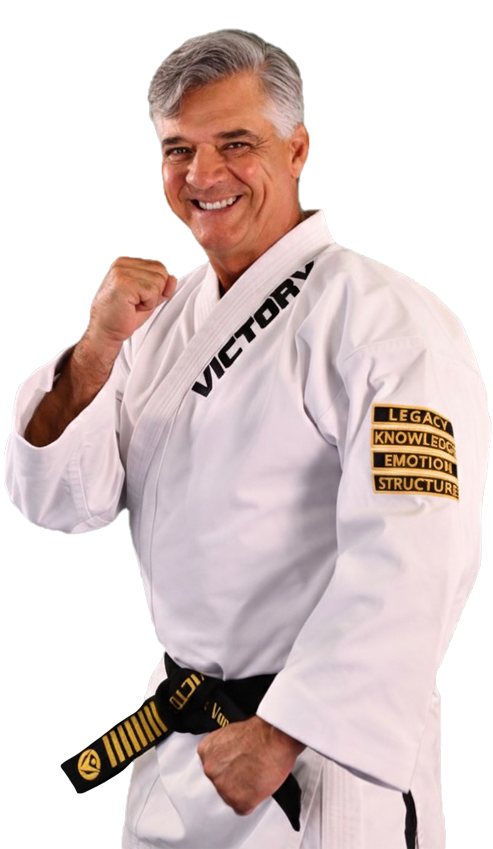
Congratulations Grand Master Sergio Von Schmeling
On Your Go2 Karate Lifetime Achievement Award
Introducing Grand Master Sergio Von Schmeling
The Go2 Karate Lifetime Achievement Award Recipient
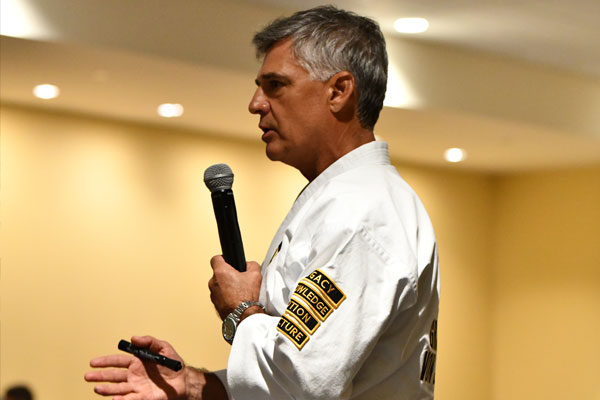
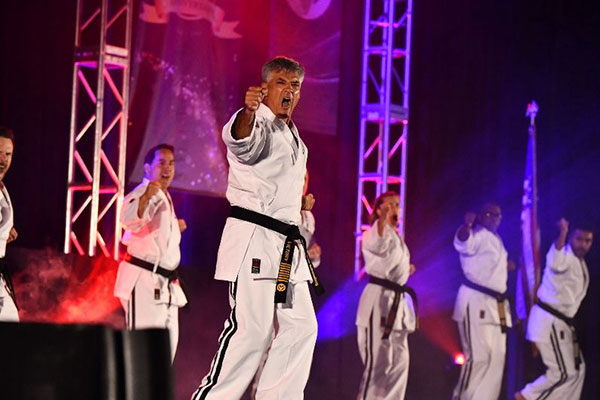
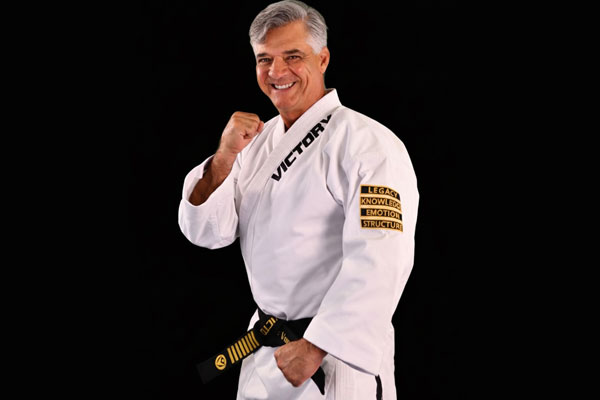
He can also be seen HERE on the Go2 Karate Home Page
He can also be seen in the G2K Recognition Award Wall Of Recipients
To all my fellow Martial Artists,
Every quarter, the Go2 Karate Recognition Board honors a martial artist whose life and leadership rise above the ordinary. This month, we recognize a man whose impact reaches far beyond the walls of his schools, Grand Master Sergio Von Schmeling.
Grand Master Von Schmeling is a 9th Degree Black Belt and the founder of Victory Martial Arts, one of the most respected and successful martial arts organizations in the United States and Worldwide. Born in Paraguay as the seventh of ten children, he began working at just seven years old to help support his family. Though raised in poverty, his parents instilled in him a belief that would shape his destiny. That greatness was possible through discipline, faith, and perseverance.
At the age of 12, he discovered martial arts. By 18, he had earned his Black Belt and quickly distinguished himself as one of the most accomplished martial artists in his country. He opened his first school soon after, building leaders and expanding into multiple successful locations. In 1993, he brought his vision to the United States. What began as a single school has grown into more than 45 locations nationwide, with the Victory curriculum now taught in over 1,000 schools worldwide.
For more than three decades, his mission has remained unwavering. That is to inspire, educate, and elevate children, families, and communities to reach their highest potential. His life skills–based philosophy develops confident, disciplined leaders grounded in respect, integrity, and perseverance. He is truly a mentor of mentors and a Master of Building people as much as programs.
On a personal note, I have known Grand Master Von Schmeling for decades. He has not only influenced the industry, he has influenced what I had managed in my own Martial Art Schools. His leadership, wisdom, and example have taught me lessons that extend far beyond martial arts.
It is with great respect that we recognize Grand Master Sergio Von Schmeling for his legacy of excellence and those lives he has truly transformed.
Tracy Lee Thomas
8th Degree
Go2 Karate Recognition Board Member
Founder | Go2 Karate

Lifetime of Legacy
Add your voice to celebrate the award and the man behind it. We invite you to leave a congratulatory note for Grand Master Sergio Von Schmeling in honor of his Go2 Karate Lifetime Achievement Award. Whether you are a student, an instructor, or part of the martial arts industry, your words of recognition and celebration are welcome. Share your message and join the community in honoring his lasting impact.
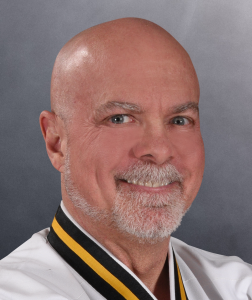
Greg Moody
8th Degree Black Belt, Chief Master Instructor
KarateBuilt Martial Arts
Cave Creek, AZ
It is an honor to recognize Grand Master Sergio Von Schmeling as the recipient of the Go2 Karate Lifetime Achievement Award for his extraordinary contributions to Taekwondo and the martial arts community worldwide. Born in 1964 in rural Paraguay, his journey from humble beginnings to international leadership is nothing short of incredible. From helping his family on a small farm to discovering Taekwondo at age 12, earning his black belt by 18, and opening his next school shortly thereafter, his life reflects resilience, discipline, and unwavering determination.
I have had the privilege of watching Grand Master Von Schmeling’s work in our industry for many years. His competitive success as a national champion and grand champion in Paraguay demonstrated his skill and courage early on. Yet what truly distinguishes him is not only what he achieved on the mat, but what he built off of it. When he opened his first school and was restricted to teaching only children, he adapted rather than retreated. Guided by his father’s counsel, he began integrating discipline, respect, and life principles into every class — shaping a model of martial arts instruction that emphasized character as much as technique.
Through his leadership as Founder and CEO of Victory Martial Arts, Grand Master Von Schmeling has developed one of the largest martial arts organizations in the United States. His commitment to continuous growth, innovation, and excellence has influenced countless instructors and thousands of students. His work has strengthened families, built leaders, and elevated the professional standard within the martial arts industry.
Please join me in congratulating Grand Master Sergio Von Schmeling on receiving the Go2 Karate Lifetime Achievement Award. His incredible story, steadfast leadership, and enduring impact stand as a model of integrity, perseverance, and service to martial arts worldwide.
Huge congratulations, Grand Master von Schmeling! Seeing you recognized with the Go2Karate Lifetime Achievement Award is truly inspiring. Your journey from Paraguay to building Victory Martial Arts into what it is today is a testament to the discipline and leadership you teach every day. Thank you for everything you’ve done for the martial arts community, this honor is well-deserved!
Congratulations, Grand Master Von Schmeling. This honor is so well deserved.
With respect ,
Denise Morin
5th Degree
Go2 Karate Recognition Board Member
Go2 Karate Editor

It is an honor to recognize Grand Master Sergio Von Schmeling as the recipient of the Go2 Karate Lifetime Achievement Award for his extraordinary contributions to Taekwondo and the martial arts community worldwide. Born in 1964 in rural Paraguay, his journey from humble beginnings to international leadership is nothing short of incredible. From helping his family on a small farm to discovering Taekwondo at age 12, earning his black belt by 18, and opening his next school shortly thereafter, his life reflects resilience, discipline, and unwavering determination. I have had the privilege of watching Grand Master Von Schmeling’s work in our industry for many years. His competitive success as a national champion and grand champion in Paraguay demonstrated his skill and courage early on. Yet what truly distinguishes him is not only what he achieved on the mat, but what he built off of it. When he opened his first school and was restricted to teaching only children, he adapted rather than retreated. Guided by his father’s counsel, he began integrating discipline, respect, and life principles into every class — shaping a model of martial arts instruction that emphasized character as much as technique. Through his leadership as Founder and CEO of Victory Martial Arts, Grand Master Von Schmeling has developed one of the largest martial arts organizations in the United States. His commitment to continuous growth, innovation, and excellence has influenced countless instructors and thousands of students. His work has strengthened families, built leaders, and elevated the professional standard within the martial arts industry. Please join me in congratulating Grand Master Sergio Von Schmeling on receiving the Go2 Karate Lifetime Achievement Award. His incredible story, steadfast leadership, and enduring impact stand as a model of integrity, perseverance, and service to martial arts worldwide.
Respectfully,
Greg Moody
8th Degree
Go2 Karate Recognition Board Member
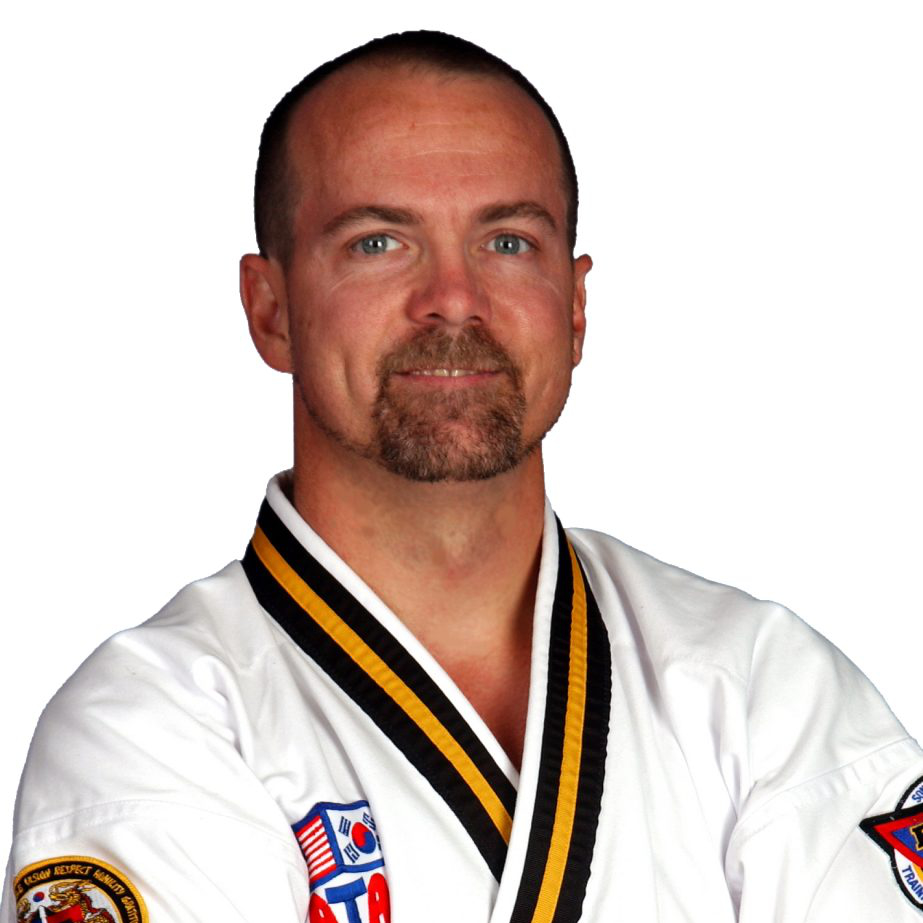
An Interview With Sergio Von Schmeling - Go2 Karate Lifetime Achievement Award Winner
Conducted by Dr. Greg Moody, Chief Master, Go2 Karate Magazine
Interview Highlights:
Dr. Greg Moody:
Great to have you here, sir. I’m really excited for this conversation. One of my favorite people in the world, Grand Master Sergio Von Schmeling. He's the founder and CEO of Victory Martial Arts, one of the largest martial arts organizations in the US. Born in 1964 in rural Paraguay, he discovered Taekwondo at twelve, earned his black belt at eighteen, and started his own school in Paraguay right after that.
We appreciate you being here sir, and congratulations on being the recipient of our National Lifetime Recognition Award.
Sergio Von Schmeling:
Thank you very much for having me here.
Dr. Greg Moody:
My pleasure. Your life is really a picture of all kinds of different scenarios. You started out in Paraguay. Tell us about that. You started your journey there.
Sergio Von Schmeling:
Most people don't know where Paraguay is. It’s a landlocked country in between Brazil, Bolivia, and Argentina. They call it the Heart of South America. One thing that is unique about Paraguay is that we have two languages: Spanish and Guarani, which is the native language, and no other country in the world speaks it.
Dr. Greg Moody:
So, you grew up speaking both in the home?
Sergio Von Schmeling:
Yes, and my father knew German. He was the son of a German family, but he was very proud and kind of a rebel, so he ran away from his family and went to the countryside, where his grandmother helped him build a little shack in the middle of nowhere. That’s where I was born. Later he decided to move us to the city, but we had nothing, and he didn’t know what to do.
We moved from place to place while he repaired shoes to make money. That was my first exposure to poverty. In the countryside, you don’t know you’re poor because you have mangoes, bananas, corn, avocados. You eat, you play in the forest, and you’re fine. But in the city, when you don’t have electricity, running water, or money for an ice cream, and you see other kids who do, that’s when you know.
That was my quest to get out of poverty, and it was on advice from my mother. She said, "You need to believe in God. You need to honor and respect your parents. You need to study, and then you need to work." I started to do those four things and continue to every day.
Dr. Greg Moody:
That's pretty good advice your mom gave you. It comes down to those things, especially having the value to continue to grow and get better. How did Paraguay influence your martial arts?
Sergio Von Schmeling:
After the Korean War, many Koreans went around the world. A lot of them wanted to come to the United States, but immigration was limited, so some went to smaller countries like Paraguay, bought citizenship, and planned to enter the U.S. that way. Many stayed and built strong communities, which is why Paraguay, and Brazil, had large Korean populations. That’s how Taekwondo came to Paraguay, and that’s how I learned it.
I signed up when I was 12. I worked with my father repairing and selling shoes, went to school at night so I could work during the day, and even worked downtown just so I could stay enrolled.
Dr. Greg Moody:
You had to work at that age just to be able to go to school?
Sergio Von Schmeling:
Oh yes. Not just me, most kids my age were working, selling newspapers, shining shoes, delivering things. I did all of that, but even then, I had big ambition. This was 1976, right after the Bruce Lee era, and Kung Fu was on TV with David Carradine. I was totally inspired.
I also liked to fight. When you work on the street, you’re always carrying money, and the older kids knew it. I learned to wrestle, to punch, to kick. I got beaten up many times, but when I started learning martial arts, it felt different. I was learning how to kick properly, how to defend myself, and I was excited.
Dr. Greg Moody:
How did you go from being a student to becoming an instructor and opening your own school in Paraguay?
Sergio Von Schmeling:
I never wanted to be an instructor. Most instructors back then were bodyguards, soldiers, police. My goal was to be a lawyer. Lawyers made money, and I liked to argue. Everyone said, “Sergio is going to be a lawyer.”
My instructor would tell me, when I was thirteen or fourteen, “Sergio, start the class, I’m going to meditate.” I believed he was a master. I’d run the warm-up for 30 minutes, and he never came back. One day I went to check on him, and he was asleep with a bottle of beer next to him. I was very disappointed in him.
Dr. Greg Moody:
Good thing he had you there to teach.
Sergio Von Schmeling:
Then I started to compete. The first time I competed, I was a green belt, but I entered as an adult even though I was only thirteen. I won third place, and I still have that little medal to this day. No ribbon, just the medal. The guy I beat was an adult, and today he’s a well-known radio personality in Paraguay. He writes to me sometimes.
When I was close to my eighteenth birthday, my instructor told me, “You’re going to test for your black belt in December.” Then he told me, “You should open a martial arts school.” I said no because I was preparing to enter law school. He said, “Ozuna has a school. You could do something similar.” I still said no.
Then he said, “I’ll lend you the money.” I went to talk to Master Ozuna, and he said, “I’m moving my school to my own building. I’ll sell you this one.” That’s how I bought Master Ozuna’s first school.
Dr. Greg Moody:
Wow, I didn’t know that.
Sergio Von Schmeling:
Yeah. After that, I applied for my license with the Paraguayan Taekwondo Association. My instructor was very upset. He thought I was going to compete with him. Around the same time, I won the national championship. I beat the number one guy in Paraguay, Master Cáceres. Everyone said, “He’s going to kill you.” I was scared, but I beat him. After that, my name was in the newspaper everywhere.
Because of that, my instructor went to the association and they told me, “You cannot teach adults. Only kids and ladies.” In 1983, that was almost nobody. I had already lost my job and put all my money into the school, so I started teaching kids only.
At the same time, I opened a small store next to the school for my father. He would watch my classes and say, “Son, make sure you talk about discipline, talk about respect, talk about obedience.” I didn’t even know what life skills were back then, but I started tying every technique to something my father told me to say to the parents. That’s how my first school really started.
Dr. Greg Moody:
That’s amazing.
Sergio Von Schmeling:
I can tell you, Master Moody, if I made a list of moments in my life guided by destiny, by God, or what some people call coincidence, I could easily name fifty.
One of them happened when I was seven years old. We had just arrived from the countryside, and the school in our poor district was full. They didn’t accept me. The only school available was two or three miles away, in a rich district. That’s where I went.
A week later, one of the kids invited me to his house after school. I walked in and saw things I had never seen before: electricity, a real floor. We had dirt floors where I lived. The first thing that hit me was the smell of milk and coffee. Poor kids don’t drink that, we drink hot tea. Then his mother gave me bread with butter and jelly. Oh my gosh.
If the school near my house had accepted me, I never would’ve been exposed to the other side. That exposure changed my life. Everything is an exposure.
Dr. Greg Moody:
Right, and without that exposure, you wouldn’t have had the perspective.
Sergio Von Schmeling:
Exactly. I would’ve just lived without knowing. The same thing happened later in martial arts.
Dr. Greg Moody:
And now you provide that exposure to others. Students walk into your schools without knowing what’s possible, what their life could look like, and you show them that.
Sergio Von Schmeling:
Exactly. People can’t want what they’ve never seen.
Dr. Greg Moody:
And in martial arts, too many school owners accept low quality, low status, and low expectations, and that’s the opposite of what it should be. But let’s move on, because we could spend an hour on this. You eventually move to the United States. What brought you here, and how did that go at first?
Sergio Von Schmeling:
The ATA. I helped Grand Master Ozuna at first. He got the ATA license, and we started in South America in 1984. I worked alongside him, Master Garay, Master Diaz, and Master Barrios. We all followed Master Ozuna. In 1985, he invited his instructor, Master Clint Robinson, to the U.S., and I was deeply impressed by him.
In 1987, Eternal Grand Master Lee traveled with a group, and later I was told he wanted me to attend the national event as a guest. We came to the U.S., competed in the tournament, and faced the two top American competitors in a team match—me and Master Garay. Master Clark was the referee, and we won.
In 1989, I returned, this time with Master Diaz. After the tournament, Grand Master Lee invited us to dinner. When it ended, Master Diaz said, “I’m going to the Greyhound station. I’m not going back to Paraguay.”
Dr. Greg Moody:
Wow.
Sergio Von Schmeling:
The next day, I call Master Ozuna and say, "I want to stay. Can you talk to somebody in headquarters? I would work for free." Master Dale Craig was in charge of the headquarters. He said, "Let me call my instructor, Master Clark. Maybe he has some use for you." Master Clark said, "Yeah, tell him to come." I flew to Jacksonville, and he offered me a job. We didn't know that I couldn’t work because I only had tourist visa. I came legally as a tourist, but I was working illegally for a period of time.
Dr. Greg Moody:
You didn't know that was a problem at the time?
Sergio Von Schmeling:
Master Clark and I thought we could just send in an application, but when I spoke to a lawyer, he said, “You need to go back to Paraguay. This could take five years, if they even approve it.” I couldn’t go back because I’d sold everything—my school, my house, my car.
Dr. Greg Moody:
That must have motivated you.
Sergio Von Schmeling:
Yes, it did. I was living in fear because my I-94 was about to expire. Then one day, while I was teaching a noon class, the woman at the counter said there was a guy who wanted to talk to me. I saw a man with a gun and a blue jacket that said Immigration Inspector, and I thought, “They got me.”
After class, he stood up and bowed. He told me he was a former student of Master Clark, a former Marine and a third-degree black belt. He’d heard my class and wanted to train.
Dr. Greg Moody:
Wow.
Sergio Von Schmeling:
A couple of weeks later, I told him my visa was about to expire, and I didn’t have permission to work. He said, “No problem. Come to my office.” He extended my stay and introduced me to a lawyer.
Dr. Greg Moody:
Another one of those moments.
Sergio Von Schmeling:
Exactly. The lawyer told me again to go back to Paraguay. I said, “I can’t. There has to be another way.” He told me about the specialty ability visa, for people with recognized skills who can contribute to the U.S. I said, “That’s me.”
He asked me to prove it. My mother had saved every article about me, so I called my brother to get it. We put together a full folder of newspaper and media coverage, sent it in, and they accepted me.
Dr. Greg Moody:
That’s not just things happening, that’s you not taking no for an answer.
Sergio Von Schmeling:
Exactly. When you grow up poor, you don’t accept no. If you want something, you obsess. My obsession back then was getting out of poverty, and that stayed with me. Today, maybe my obsession is freedom.
Dr. Greg Moody:
Freedom to have the time to live the lifestyle?
Sergio Von Schmeling:
The change. When I opened my first school in 1993, my obsession was to have 300 active students in the first year. I had 323, because I said, “I have to do that.” That’s a pattern with me.
Dr. Greg Moody:
Fast-forward to Victory Martial Arts with 44 schools in the U.S. That’s about 33 years of growth. Tell us how you got there.
Sergio Von Schmeling:
Before I came to the U.S., I already had five schools in Paraguay. I knew I could multiply myself. I always believed if God gave you a gift or a talent, your responsibility is to multiply it. That became very clear to me.
The first school is hard. The second is easier. The third and fourth are much easier, because now you know what to do. You train your people. You have to be the role model. You pay them well. You give them recognition, but more than that, you give them community and a sense of purpose. That’s still what we do today.
That’s also why we created the Victory Legacy Foundation, to give purpose not just to the people we help, but to our own team and partners.
Dr. Greg Moody:
Say more about that.
Sergio Von Schmeling:
In 2007, my wife, Barbara, and I had a joint birthday party and asked people not to bring gifts, just cards. After that, we started asking for donations to different charities.
One day I said, “Why don’t we just ask for donations to our own charity in South America?” That’s how it started. We made it official, and to this day, we match every dollar donated no matter how much.
Dr. Greg Moody:
That’s incredible.
Sergio Von Schmeling:
Now we’ve built a multi-use facility there. In poor countries, the priority is food and medicine. That’s what kids need first. Then clothes, hygiene products, and mattresses. We donate thousands of mattresses every year because people don’t even have a place to sleep.
Last month, for the first time, we created incentives for schools that collect the most donations. We also want to be able to help here in the U.S. when things happen.
Dr. Greg Moody:
I love that. I’m not surprised it works. People may pay good tuition, but they appreciate knowing they’re also helping others. I think your students and families really appreciate that. It’s exciting to see.
Sergio Von Schmeling:
Yes, it is.
Dr. Greg Moody:
What advice would you give martial arts school owners? For those wondering what it takes to become a Victory school, what would you tell them?
Sergio Von Schmeling:
The biggest thing is culture. In martial arts, people learn one way and think, “That’s it.” But martial arts is like any other business. It’s innovation and marketing. We are not very innovative in this industry.
Look at what I’m wearing—a polo and performance pants. That’s our instructor uniform. Students wear something similar with a belt. People say, “That’s not traditional.” I disagree. If you teach traditional values, then it’s traditional.
Dr. Greg Moody:
In a good way, though.
Sergio Von Schmeling:
Exactly. If your brain isn’t used, it gets rusty. You need to clean it and put in new oil. Just like an engine. You can’t solve problems with the same mindset that created them, and that’s what happens in martial arts. People keep the same thinking and expect different results.
Very few people are willing to say, “Blank page, let’s start over,” but the ones who do, the ones who take parts of the Victory concept, they’re doing fantastic.
Dr. Greg Moody:
Yes, I’ve seen that. They’re very happy.
Sergio Von Schmeling:
Exactly.
Dr. Greg Moody:
Before we finish, anything else you’d like readers to know?
Sergio Von Schmeling:
I host a convention every year in Orlando. People can come and see everything we do, like how we train instructors, how we price, how we test black belts. Grand Master Clark participates fully. We open our books and our minds.
Martial arts is the art of living. When you undervalue it, by charging too little or not promoting it, you hurt the art itself. Yes, we charge high prices. We charge what we believe we’re worth.
I’ll talk to any martial arts instructor or school owner in the world. If you’re asking for advice, I’ll gladly give it as a fellow human being and a fellow martial artist. What I don’t do is give away systems or materials that took me years to develop, but for advice or help, I’m always open.
Dr. Greg Moody:
I’d also encourage people to attend your convention. I came out for your ninth-degree testing a few years ago, and it was very impressive. The tournament, the convention, how you train instructors—it’s all top-level. I hope people take the opportunity to come see it and meet you in person.
It was really good to talk to you today. Thank you, sir.
Sergio Von Schmeling:
Thank you. It’s good to talk to you too.