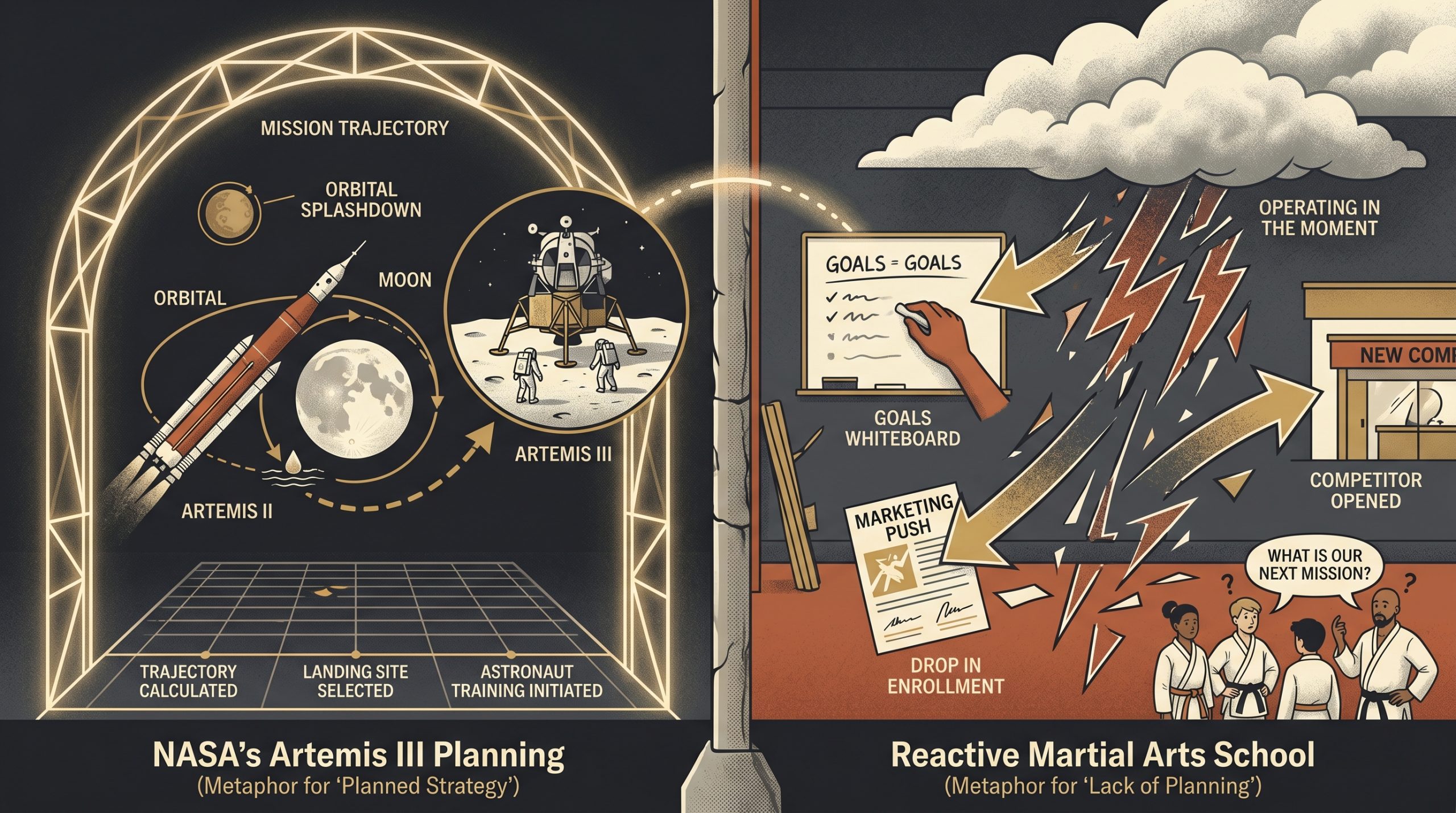
The Artemis program was never designed to end with Artemis II. From the moment the program was conceived, each mission was a step in a sequence: Artemis I to test the uncrewed system, Artemis II to test the crewed system around the moon, Artemis III to land humans on the lunar surface for the first time in more than 50 years. The success of Artemis II was not the destination. It was the proof of concept that makes Artemis III possible. Every system tested, every protocol refined, every lesson learned during the lunar flyby becomes the foundation on which the next mission, the more ambitious one, is built.
NASA did not celebrate the Artemis II splashdown and then begin wondering what to do next. Artemis III planning had been underway for years before Artemis II launched. The trajectory was already calculated. The landing site near the lunar south pole had already been selected. The astronauts who will walk on the moon had already begun their specific mission training. The success of the current mission was not an ending. It was a milestone in a much longer journey that was mapped out long before the rocket left the ground.
This is the article that asks the hardest question in this entire series. Not about your Google Business Profile or your AI search visibility or your enrollment sequence or your after-hours communication coverage. Those questions are about the work that needs doing. This question is about the mind that does the work. The question is this: does your school have a trajectory? Not a to-do list. Not a set of goals written on a whiteboard that gets ignored by February. A genuine, written, sequenced plan for what your school will look like in 12 months, in 24 months, in the next phase of its growth, built on the foundation of what you are doing right now and designed to take you somewhere more ambitious than where you currently are?
For the majority of martial arts school owners, the honest answer is no. And that answer, which most owners would offer without defensiveness because they know it is true, explains more about the gap between what their schools are capable of and what their schools have actually achieved than any other single factor.
The Reactive School and the Planned School
There are two fundamentally different ways to run a martial arts school, and the difference between them shows up not in instruction quality or facility size or program offerings but in how decisions get made and when.
The reactive school makes decisions in response to conditions. Enrollment drops, so the owner starts looking at marketing options. A competitor opens nearby, so the owner considers what to do about it. A review comes in that is less than perfect, so attention briefly turns to the reputation. A month of strong new student inquiries creates confidence; a slow month creates anxiety. The reactive school is always responding to what is already happening, which means it is always behind the curve, always addressing yesterday’s conditions with today’s decisions, and always operating without the runway that planning provides.
The planned school makes decisions in advance of conditions. It has already decided what its enrollment target is for the next 12 months and what the monthly new student number needs to be to reach it. It has already decided what its digital infrastructure roadmap looks like and what gets built in what sequence. It has already decided how it will respond to competitive pressure because it has thought through competitive scenarios before they materialized. It has already established the review generation process, the AI search optimization stack, the enrollment sequence, and the culture content practice as ongoing systems rather than projects to start when things slow down. The planned school is always operating from a position it prepared for rather than reacting to a position it found itself in.
Research on small business planning and performance is remarkably consistent on this point. A Bain and Company study on strategic planning in small and medium businesses found that businesses with a written strategic plan grew revenue at more than twice the rate of comparable businesses without one, not because the plan was executed perfectly, but because having a plan changed how the owner made daily decisions, what they prioritized, and how they responded when conditions shifted. The plan was not a prediction of the future. It was a framework that made every decision in the present more purposeful and more aligned with a defined destination.
“Our team asks every school owner we work with one question at the start of the relationship: what does your school look like in two years? Most of them pause. A few of them give a vague answer about having more students or doing better. Very few of them have a specific picture. And without a specific picture, the decisions made every day are not building toward anything. They are just getting through the day. Getting through the day is not a strategy. It is survival, and survival and growth are not the same thing.”
Tracy Lee Thomas | Founder, Rev Marketing & Go2 Karate
What a Two-Year Trajectory Looks Like for a Martial Arts School
A two-year trajectory for a martial arts school is not a spreadsheet projection or a marketing budget. It is a sequence of missions, each one building on the last, each one designed to put the school in a stronger position for the one that follows. The Artemis program is the perfect model for this kind of thinking: the missions are not independent events. They are steps in a deliberately sequenced journey toward a destination that was defined before the first mission launched.
Mission One: Foundation and Visibility
The first mission for most schools is establishing the digital foundation that everything else depends on. Complete Google Business Profile. Full entity consistency across all directories. Schema markup on the website. Complete and active Go2 Karate listing. Review generation process in place and producing consistent volume. AI search visibility stack implemented. This mission has a defined completion state: every signal that AI systems and search engines use to evaluate the school is present, consistent, and maintained. Without this foundation, every other mission is launching from unstable ground. With it, every subsequent investment in marketing, content, and growth builds on something that compounds rather than dissipates.
Mission Two: Communication and Conversion
The second mission, which often runs in parallel with the first but deepens over time, is establishing the communication infrastructure that converts the visibility the first mission creates into actual enrolled students. Unified command center. AI voice agent for after-hours coverage. Automated enrollment sequence from inquiry to trial to enrollment. Multi-channel communication capability: phone, text, chatbot, form. This mission has a defined completion state: every inquiry receives an immediate, warm, capable response regardless of when it arrives, and every inquiry enters a structured sequence that gives it the highest possible probability of resulting in an enrollment.
Mission Three: Culture and Community
The third mission is building the authentic culture presence that makes the school’s quality visible to the people who have not yet found it, and that deepens the connection of the people who are already there. Consistent culture content practice. Student transformation stories shared with permission and care. Community moments documented and distributed. Review content that reflects the real depth of the school’s impact. This mission has no fixed completion state because a school’s culture is always evolving and the content that reflects it should evolve with it. But it has a clear direction: the school becomes increasingly visible as a community, not just a service, and that visibility attracts the kind of students who will stay, refer others, and represent what the school is capable of producing.
Mission Four: Optimization and Expansion
The fourth mission, which becomes available only when the first three are established and functioning, is the one that most school owners are trying to jump to before they have the foundation to support it. New programs for underserved audiences. Partnership and referral networks with schools, pediatricians, therapists, and community organizations. Expansion of adult programming for self-defense, fitness, and competitive training. Geographic expansion or satellite locations. These opportunities are real and accessible, but they produce dramatically better results when the school launching them has a strong digital foundation, a reliable enrollment system, an active community presence, and the operational capacity that comes from not trying to manage everything manually. Mission Four is not a reward for completing the first three. It is the natural next step that becomes possible when the first three have been done well.
Why Most Schools Never Get to Mission Four
The reason most martial arts schools spend years at the same enrollment level, oscillating between months that feel like progress and months that feel like starting over, is not that they lack ambition or capability. It is that they are perpetually in Mission One mode without the infrastructure that would allow Mission One to complete and Mission Two to begin. They set up a Google Business Profile but do not maintain it. They implement a follow-up process but do not systematize it. They have a good month of culture content and then three months of silence. Nothing compounds because nothing is ever finished enough to build on.
Research from the Harvard Business School on goal achievement and habit formation shows that the most significant predictor of long-term goal success is not motivation or intention but system design: the degree to which the behaviors required to reach the goal are embedded in reliable systems rather than dependent on ongoing decision-making and willpower. A school owner who has to decide every day whether to follow up on yesterday’s leads will follow up inconsistently. A school owner whose follow-up runs automatically through a system that was built once and maintained does not have to make that decision. The outcome is not dependent on their energy level, their available time, or competing demands on their attention. The system runs. The mission advances.
This is why the Stay Ahead Program is structured as an ongoing partnership rather than a one-time project. Because the missions do not end. Artemis III is already planned not because NASA finished everything with Artemis II but because the program was designed from the beginning to be a sequence, with each mission building on the last in a continuous journey toward a destination that was defined before the first rocket left the ground. Your school deserves that same kind of intentional sequencing, built on systems that run reliably so that each mission can complete and the next one can begin.
The planning question most owners have never answered: If your school grows at the rate it has been growing for the past 12 months, where will it be in 24 months? Is that where you want it to be? If the answer to the second question is no, then the growth rate itself is the first thing that needs to change. And growth rates do not change through effort alone. They change through the systems, the infrastructure, and the strategic sequencing that turns effort into compounding momentum rather than recurring starts.
What Planning Actually Produces
Revenue growth rate for small businesses with a written strategic plan vs. comparable businesses without one
(Bain & Company)
Of fast-growing companies have formal written marketing and growth plans, vs. 44% of stagnant companies in the same categories
(CoSchedule Marketing Survey, 2024)
Average student lifetime at a well-run martial arts school with strong retention systems, making each new enrollment a multi-year revenue relationship
(Go2 Karate platform data)
Typical time horizon at which schools with full digital infrastructure begin experiencing compounding growth that pulls decisively ahead of reactive competitors
(Rev Marketing platform data)
The three to five year student lifetime statistic deserves a moment of specific attention. Every new student your school enrolls is not just a monthly tuition relationship. It is a multi-year relationship whose total value, calculated by multiplying your monthly tuition by the average retention duration, is significantly larger than the monthly number suggests. The school that improves its monthly enrollment by ten students and retains those students for an average of four years has not just grown its monthly revenue. It has built a compounding asset that continues to produce value long after the enrollment conversation is over. That compounding dynamic is the reason strategic planning matters so much in this business. Every decision about marketing, about infrastructure, about the enrollment sequence and the student experience, is not just affecting this month’s revenue. It is affecting a multi-year relationship that is either being built well or not being built at all.
The School That Planned Its Next Mission
A school we work with in the Mid-South came to us with a clear frustration: they had been working hard for six years and felt like they were running in place. Their enrollment fluctuated between 48 and 62 active students. They had good months and difficult months but no sense of a trajectory that was going anywhere in particular. The owner described it as feeling like they were always starting over, every slow month undoing the progress from the good months before it.
When our team reviewed their operation, the pattern was immediately recognizable. There was no sequencing. Every initiative was launched in isolation in response to a condition, a slow month prompting a Facebook ad push, a competitor opening prompting a pricing review, a good month producing enough relief to delay addressing the underlying systems. Nothing had been built to compound. Everything was being rebuilt repeatedly from a position of reaction rather than progressing from a foundation of intention.
Active student range across six years, oscillating without meaningful trajectory
Active students at the 12-month mark of sequenced mission implementation
Active students at the 24-month mark, with a second location in planning
We built a two-year trajectory with them. Mission One addressed the digital foundation: Google Business Profile rebuilt and active, Go2 Karate listing completed, schema markup implemented, NAP consistency corrected across 24 directory listings, review generation process launched producing 67 new reviews in the first 90 days. Mission Two addressed the communication infrastructure: Rev Connect 360 deployed with AI voice agent, automated enrollment sequence, unified dashboard. Mission Three addressed culture content: a consistent posting practice built around real student moments, with a parent community member who had been asking to help the school finally given a clear role and the tools to fulfill it.
At the 12-month mark, active students had grown from the 48 to 62 range to 94. At the 24-month mark, active students had reached 141, the school had added a second instructor to meet demand, and Mission Four, a second location in a neighboring community where Go2 Karate data showed strong unmet demand for martial arts programs, was in active planning. The owner’s reflection at the two-year mark: “For six years I felt like I was working hard and going nowhere. The difference was not working harder. It was finally knowing where we were going and building the sequence to get there.” Multiply that growth from 55 average students to 141 by your tuition rate and your average student retention duration, and the two-year value of sequenced planning becomes very tangible.
What the Stay Ahead Program Is Actually About
This is the final article in the Stay Ahead Program series, and it is the right moment to be direct about what this program is and what it is designed to do for the schools that engage with it fully.
The Stay Ahead Program is not a collection of marketing services. It is a framework for building a martial arts school that grows on a trajectory, not a roller coaster, by implementing the right infrastructure in the right sequence, maintaining it with the right systems, and planning the next mission before the current one is finished. Every article in this series has addressed one component of that framework: visibility, first impressions, AI search, command center operations, communication infrastructure, enrollment sequences, culture content, and strategic planning. Each component is important. None of them produces the results that all of them together produce, because growth in a martial arts school is not a single-variable problem. It is a system, and systems only perform at their potential when all the components are present and working together.
The schools that have engaged with this framework fully, that have built the foundation, established the communication infrastructure, developed the culture content practice, and planned their two-year trajectory, are the schools that look back 18 months later and describe the experience the same way: they feel like they are finally running a school instead of being run by one. They describe a clarity about where they are going and why each decision they make is moving them toward that destination. They describe a confidence in their inquiry handling and enrollment conversion that comes from knowing the system is working rather than hoping each individual interaction goes well. And they describe a relationship with their own school that is, for the first time in years, energizing rather than exhausting.
That is what Staying Ahead actually means. Not being the first school in your market to try every new technology. Not spending the most on marketing or generating the most leads or having the most followers on any platform. It means operating from a position of intentional momentum, with the infrastructure to maintain it and the planning to extend it, so that every month builds on the last rather than starting over from the same place.
“Artemis III will land humans on the moon. That mission is possible because every mission before it was planned and executed in sequence, with each one building the foundation the next one needed. Your school’s Artemis III, whatever that looks like for you, whether it is your first 100 active students, or your second location, or the financial stability that lets you focus entirely on teaching without the weight of a struggling business, is achievable. But it requires the same thing every moon mission has ever required: a plan, a sequence, and the commitment to build the foundation before attempting the landing.”
Tracy Lee Thomas | Founder, Rev Marketing & Go2 Karate
Your Next Mission Is Waiting
NASA is already planning where humans will walk on the moon. The landing site has been selected. The systems are being refined. The astronauts are training. The mission has a trajectory because the people responsible for it decided, long before Artemis II launched, that Artemis II was not the destination. It was the step that made the destination possible.
Your school has a destination. It may be clearer in some moments than others. It may have gotten harder to see during the difficult months when the roller coaster dipped and the bills were tight and the next great month felt further away than it should. But the destination is there, in the reason you started teaching, in the student whose life changed because of what you built, in the community that has gathered around what you offer and that deserves to grow.
The Stay Ahead Program exists to help you build the sequence that gets you there. Not by doing everything at once. Not by solving every problem simultaneously. By identifying the right next mission, building the foundation it requires, executing it with the right systems and infrastructure, and then planning the mission after that before the current one is finished. One step in a deliberate sequence, compounding in value with every month that passes, building toward the school your community deserves and the business your passion has always been capable of creating.
The Strategic Development call is where the sequence begins. It is a conversation about where your school is right now, where it is capable of going, and what the first mission looks like to get it moving in that direction. It is complimentary, it is honest, and it is the beginning of a trajectory rather than another isolated initiative that starts strong and fades when the next slow month arrives.
The next mission is ready when you are.
Schedule your complimentary Strategic Development call at Go2Karate.com. [INSERT BOOKING LINK]
This is the final article in the Stay Ahead Program series. The series has covered digital visibility and GEO, Knowledge Graph and entity authority, earned visibility and the Nutella Effect, showing up with a clear vision, AI search and the dead air blackout, Mission Control and unified operations, the Earthrise first impression, going farther than anyone before, splashdown and enrollment sequences, the solar eclipse and cognitive filters, AI voice and multi-channel communication, the crew of four and partnership, culture content, and long-term strategic planning. Every article is available at Go2Karate.com. The Strategic Development call is the next step for any school ready to build what this series has described.
Sources & Citations
- NASA – Artemis III Mission Planning: Lunar south pole landing site selection, mission objectives, and Artemis program sequence (nasa.gov)
- Bain & Company – Strategic Planning and Revenue Growth: Written plan impact on small and medium business performance (bain.com)
- CoSchedule – Marketing Survey 2024: Written marketing plan adoption rates among fast-growing vs. stagnant businesses (coschedule.com)
- Harvard Business School – Goal Achievement and System Design: Habit formation research and the role of reliable systems in long-term goal attainment (hbs.edu)
- Go2 Karate Platform Data – Average Student Lifetime at Martial Arts Schools with Strong Retention Systems: 3-5 year range
- Rev Marketing Platform Data – Compounding Growth Timeline: 18-month threshold for full digital infrastructure advantage vs. reactive competitors
- SBA – Small Business Strategic Planning: Correlation between planning horizon and five-year business survival rates (sba.gov)
- Deloitte – Growth Planning Research: Sequenced initiative implementation vs. simultaneous multi-initiative launches in service businesses (deloitte.com)