Parents are already interacting with AI before they ever speak to you. Search engines prioritize results using AI, reviews are filtered and ranked using AI, and social media feeds are curated by AI. By the time a parent walks into your school, technology has already shaped their perception of you.

The Cons: How AI Can Hurt Your School
The First Danger: Distraction
There are endless AI tools being marketed to small businesses. Many promise automation, domination, and massive growth. Most create motion, not progress. Owners experiment, tweak, adjust, and chase features that never translate into enrollments or reduced workload. If a tool does not clearly increase revenue or clearly remove labor, it is not an asset. It’s a drain.
The Second Danger: Dilution of Culture
Martial arts is human. It is discipline, correction, encouragement, eye contact, tone, posture, and presence. If AI communication becomes robotic, generic, or overly scripted, it weakens the relational strength that makes your school powerful. Parents do not enroll because of clever automation. They enroll because they trust leadership.
The Third Danger: Over-Automation
Some owners install everything at once. Chat bots. Text bots. Automated email sequences. CRM triggers. Calendar integrations. Without structure, these systems overlap. Staff do not know who is responding. Messages double up. Follow-up becomes confusing instead of clear. The result is more friction, not less.
The Fourth Danger: Intellectual Laziness
If you allow AI to think for you, write for you, and communicate for you without direction, your voice fades. Your philosophy softens. Your conviction gets watered down. AI will happily generate average thinking all day long. If you are not guiding it with clarity, you are lowering your standard. For those of you who are authors, an AI book won’t build your authority.
“Used carelessly, AI weakens focus, blurs identity, and distracts from leadership.”
Chief Master Greg Moody, Ph.D.

The Pros: Where AI Makes a Strong School Stronger
When applied with discipline, AI strengthens three areas that directly impact growth: speed, consistency, and operational control.
Speed
Speed is not a luxury anymore. It is a competitive requirement. When a parent fills out a website form at 9:18 PM asking about classes for their six-year-old, that moment matters. Interest is high, and emotion is engaged. If they wait until the next afternoon for a response, the energy drops. Intelligent systems can respond immediately, ask qualifying questions, and guide them toward scheduling. The school that responds first often earns the appointment.
Consistency
Consistency is where many schools quietly lose money. A lead inquires. They get one call. Maybe an email. Then nothing. An intro lesson is scheduled but not reinforced. A former student drifts away without structured reactivation. AI is excellent at repetition. It can send confirmations, reminders, follow-up messages, and long-term check-ins without getting distracted, tired, or inconsistent. That structure alone can raise show rates and improve enrollment percentages.
Operational Control
AI can assist with drafting policies, organizing internal systems, outlining curriculum descriptions, and structuring marketing content. Tools like ChatGPT can help refine articles, build workshop outlines, and clarify email messaging quickly. This does not replace your thinking. It accelerates it. The time saved on repetitive administrative work should be reinvested into instructor training, curriculum refinement, and strengthening student experience.
Sharper Positioning
Parents are more informed than ever. They research confidence, ADHD, bullying, discipline, and child development before enrolling. AI-assisted research tools can help you surface credible data to support your messaging. When you communicate with clarity and evidence, your school moves from “activity provider” to “professional development environment.” That shift matters.

A Real-World Example: The AI Employee
One practical way to think about AI inside a martial arts school is as a digital team member that handles repetitive communication. Systems such as Rev Connect 360 are designed to answer calls after hours, respond instantly to website inquiries, text prospects with structured qualifying questions, schedule intro lessons, send reminders, and request Google reviews automatically.
Consider a simple scenario: A parent asks, “How much are your classes?” Instead of silence or delay, the system responds professionally, gathers the parent’s name, identifies whether the lessons are for a child or adult, and guides the conversation toward scheduling an appointment. No missed call. No dropped lead. No gap in response.
This does not replace your front desk or your instructors. It protects opportunities that would otherwise disappear between classes, during evenings, or on weekends. It allows your human team to focus on enrollment conferences, parent relationships, and student development rather than chasing voicemails.
“Traditional SEO was about ranking on page one. AEO is about being the answer.”
Chief Master Greg Moody, Ph.D.
AEO: Where This Is Headed
Search is changing fast. Parents are no longer just typing short phrases into Google. They are asking full questions. They are using AI Overview. They are opening ChatGPT and asking, “What is the best martial arts school near me for a 7-year-old?” or “Does martial arts help kids with ADHD?”
If your website is not structured for AI to understand and interpret, you will not show up in those answers. This is where AEO — Answer Engine Optimization — comes in. Traditional SEO was about ranking on page one. AEO is about being the answer.
AI systems do not think like humans. They do not respond to vague marketing language. They extract structured meaning. They analyze schema markup. They interpret structured data. They evaluate semantic hierarchy. They identify entity relationships between topics, services, locations, and expertise.
If your website simply says, “We build confidence and discipline,” that is just noise. But if your website is built with machine-readable schema, clearly defined service categories, structured FAQs, and topical clusters around leadership, anti-bullying, child development, and beginner programs — AI can interpret that. It can categorize it, summarize it, and recommend it. That is a completely different competitive position.
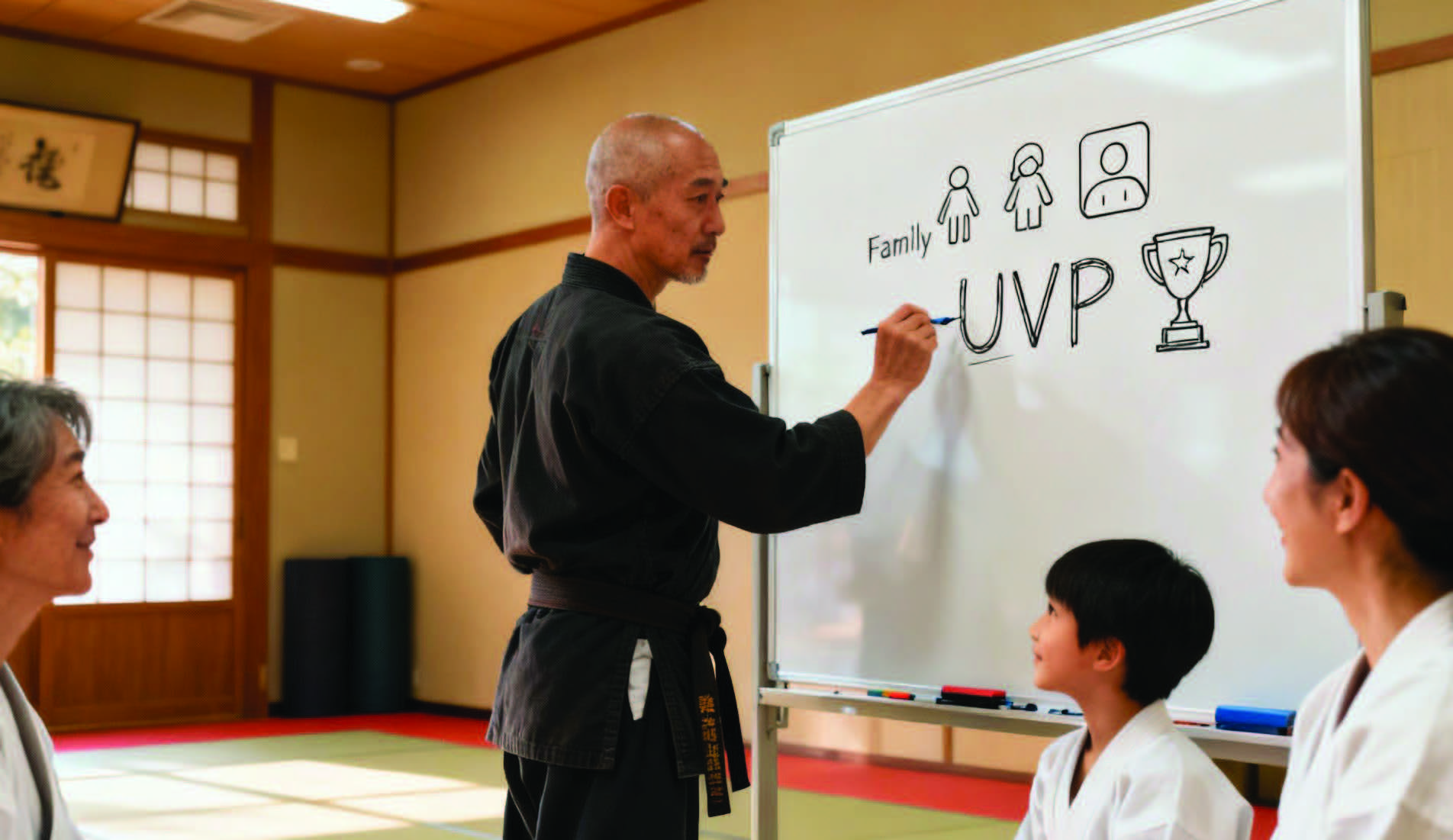
Modern Go2 Karate websites are engineered for this reality. They are not just visually upgraded templates. They are structured with proper schema layers, clearly defined entities, service-based architecture, location-specific indexing, and semantically organized content that AI systems can crawl and interpret correctly. That means when AI Overview pulls answers about martial arts training in your city, your school has the technical infrastructure to be surfaced as a credible result.
Schools that treat their website like a digital brochure will fade into generic listings. Schools that build structured, machine-readable, authority-driven platforms will be recommended. You are no longer competing only for rankings — you have to be the right answer.
Artificial Intelligence will not fix weak leadership. It will not compensate for poor instruction, and it will not build culture for you. AI will quietly elevate the schools that combine strong tradition, disciplined systems, and understanding of marketing principles as well as this fast-moving technology.

Chief Master Greg Moody, Ph.D., is the author of Parent Action Plan: ADHD! and a nationally recognized martial arts educator. He has combined decades of experience in psychology, education, and martial arts to help families and schools better support children with ADHD. As author, researcher, and instructor, Dr. Moody brings a unique perspective that bridges academic research and practical strategies for parents.