Dr. Greg Moody
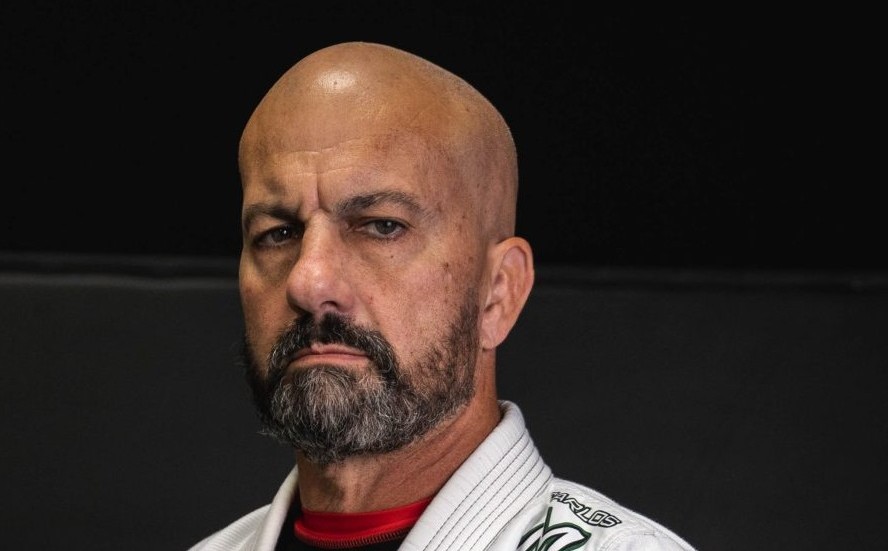
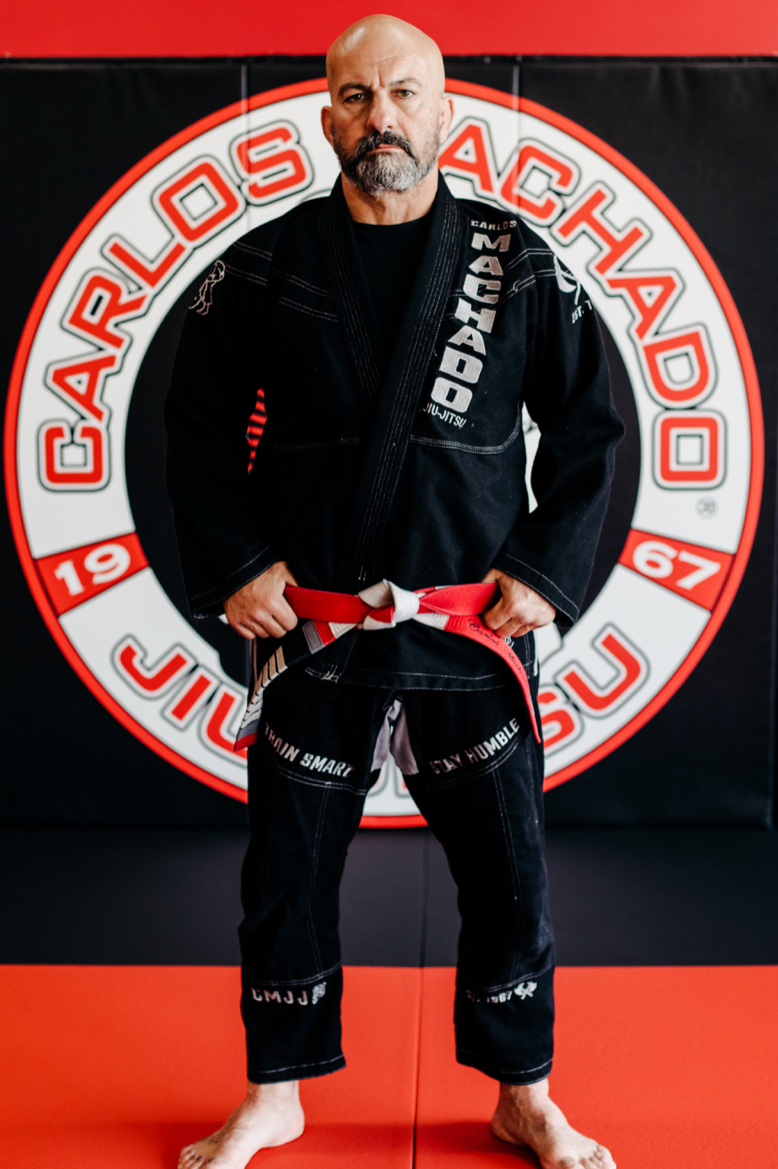
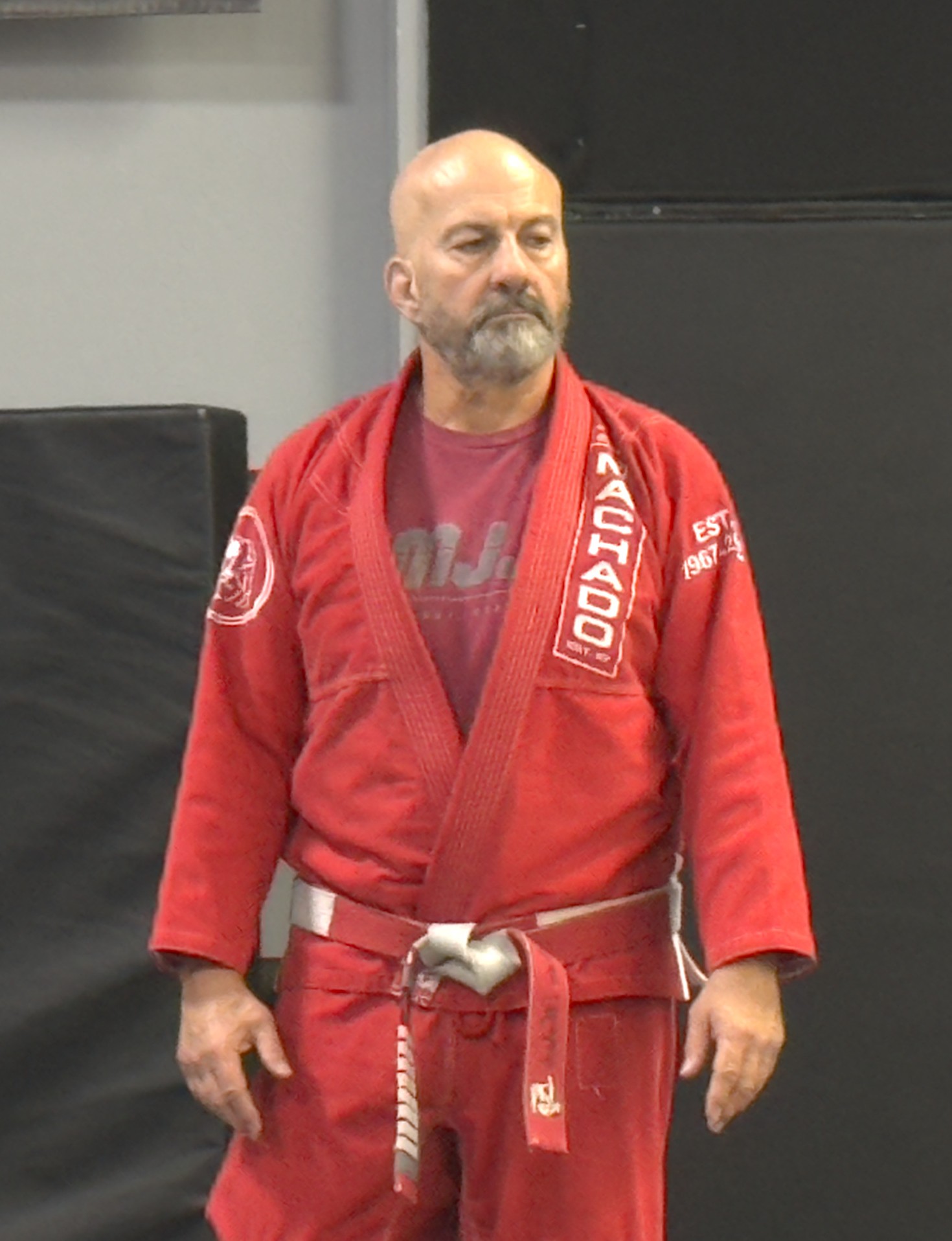
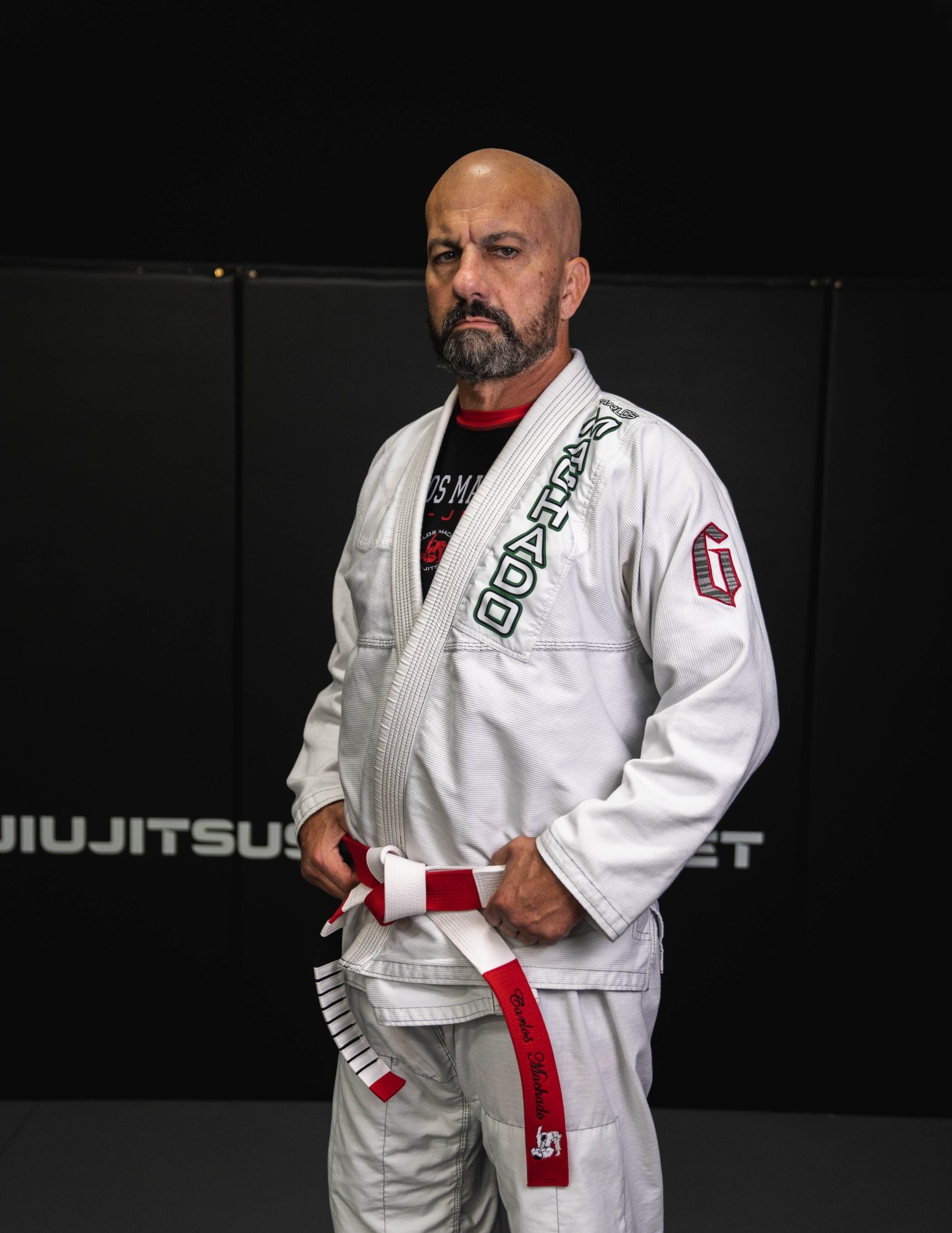
Welcome everybody. I’m honored today to be joined by Master Carlos Machado — ten-time Brazilian national champion, eighth-degree coral belt, and founder of the Carlos Machado Jiu-Jitsu Association. You’re one of the living legends of our art, sir, and I’m thrilled to talk with you.
Carlos Machado
Thank you, Dr. Moody. It’s truly my pleasure. I’ve admired your work in the martial-arts community, and I’m happy to be here.
Dr. Greg Moody
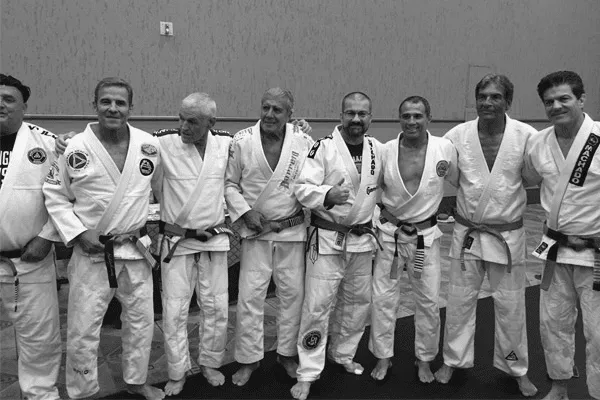
Let’s start at the beginning. What was it like growing up in the Machado family and being surrounded by the Gracies?
Carlos Machado
It was like growing up in a dojo that never closed! My family is directly related to the Gracies. My mother was a Gracie. Jiu-Jitsu wasn’t something we did after school; it was part of our identity. My earliest memories are of mats, gis drying in the sun, and my mother driving me to train with Grandmaster Hélio Gracie when I was just four years old. Later I trained with Carlson Gracie, then Rolls Gracie, and finally Carlos Gracie Jr., who became my lifelong instructor and mentor.
Imagine cousins, brothers, and uncles all rolling together on the floor every day — competition mixed with affection. There was always a hierarchy on the mat. Everyone knew who the top fighter was that week, and if you relaxed, someone would happily remind you. But it was family. We pushed each other because we loved each other.
Dr. Greg Moody
So, there was no escape. You were born into Jiu-Jitsu.
Carlos Machado
Exactly. There was no point when I “started”; I was just in it. We’d train before school, after school, weekends, and holidays. Even at birthday parties we ended up grappling on the living-room floor. It wasn’t only technique; it was lifestyle. We learned respect, humility, and discipline long before we understood those words.
Dr. Greg Moody
That sounds intense but special.
Carlos Machado
It was. There was pressure, of course. When your teacher is your uncle or cousin, you feel an obligation to perform. I remember butterflies every class, but that pressure forged character. You learned not to quit.
Dr. Greg Moody
When did you start competing seriously?
Carlos Machado
I started to compete in the mid to late ’60s, and by my teens, I was competing every month. Competition taught me about fear, how to live with it rather than avoid it. In Brazil, especially in Rio, tournaments were tough; there was no mercy on the mat. But competition also built empathy. Win or lose, you learned that everyone there had sacrificed something to be present. That lesson later shaped how I teach — helping students overcome fear, not just perfect technique.
“Competition taught me about fear — how to live with it rather than avoid it.”
Carlos Machado
Dr. Greg Moody
You didn’t initially plan to be an instructor. When did that change?
Carlos Machado
When I was about fifteen, I became an assistant instructor. At first, I would just cover some gaps in the schedule and help out during the classes. Even back then I spoke English as a second language, so whenever we had visiting foreigners, I was mainly the guy that would teach the class because I was more fluent in English than my instructors. I still remember the spark I felt seeing those students grasp a concept. Teaching gave me a rush I hadn’t felt even from winning matches.
I finished high school, went to college, and then on to law school. I still was teaching throughout, and it came to a point where I had to choose between the suit and the Jiu-Jitsu uniform. I thought, the weather’s too hot here in Rio for me to sweat in a suit. If I’m going to sweat, I might as well sweat in a gi. My father, a very influential high-court judge, had my career all planned out. He expected me to be a lawyer, but I’d realized the courtroom just wasn’t my battlefield. With teaching, I felt that power that you have to influence and change people’s lives through the martial arts, and I couldn’t back away from that. For me, it was a natural choice. Once I made my decision, the rest was history. I told my father, “Dad, I love you, but I’m going to keep sweating, just not in a suit.”
Dr. Greg Moody
He accepted that?
Carlos Machado
To his credit, yes. He said, “If this is truly what you want, then do it fully.” That blessing gave me courage, and once I started teaching full-time, I never looked back.
Dr. Greg Moody
That’s wonderful. I’m glad you had the better experience than me. When I told my father I wanted to leave my engineering career to open a Taekwondo school, he was mad at me, wouldn’t talk to me for a couple of days. He didn’t understand what we did or the culture or anything about it. It took him a bit to come around.
Carlos Machado
I’ve heard that story many times! I’ve had students who were in medical school, others like yourself in engineering, and they had their career path. They had envisioned everything that their parents had planned for them, that they had planned for themselves, and then they had a change of heart or a calling, if you will. Parents fear uncertainty for their kids, but once they see your happiness and success, they understand.
I tell my students: do what sets your soul on fire, not what others prescribe for you. Running a school is a dream, but it’s not easy. You need passion, yes, but also systems, structure, and humility. Many school owners fail not because they lack skill, but because they try to do everything alone. I learned that leadership means investing in people. It took years to realize I must train my staff the way I train my students. You can’t plant a tree and walk away; you must water it every day.
“Do what sets your soul on fire, not what others prescribe for you.”
Carlos Machado
Dr. Greg Moody
That’s great imagery.
Carlos Machado
One of my major successes was focusing on my staff more. Many times, in delegating, I’d leave them be when they were not ready to walk on their own feet. That wasn’t good for anyone — not me, not them, and not the students. When you’ve created structure, and you’ve created a system, the engine will run smoothly whether you are there or not. When you nurture your team, they grow, and the school becomes self-sustaining. Ignore them, and the whole structure collapses. Relationships, I always say, take you to the bliss or to the abyss.
Dr. Greg Moody
You came to the U.S. in 1990. How did that happen?
Carlos Machado
My brother Rigan came first, before the original Gracie Academy in Torrance opened. Rorion Gracie asked him to help because Jiu-Jitsu was exploding in Los Angeles. After a year, Rigan returned home for a visit and said to my brother John and me, “You guys need to come and see this.” I was doing well in Brazil then, teaching by the beach, enjoying life, but long-term opportunities were limited. In the U.S., there was potential to build something bigger. So, we took the leap. Initially, we helped at the Gracie Academy, but it was crowded and space was limited. We decided to go independent. That’s when fate introduced me to Chuck Norris.
Dr. Greg Moody
That’s quite a connection. How did you meet him?
Carlos Machado
Chuck had already been training with my cousins. When he heard the Machado brothers were in California, he came to meet us. From the first session, we clicked. He was a dedicated student — arrived early, took notes, trained hard. At that time, he was doing classes with us in our garage, or he would invite us to his home gym, and we would do our training there. By the way, that Total Gym that you see in his commercial, he really does that thing; he was doing amazing workouts with it.
He and Bob Wall owned a shopping center in Redondo Beach and offered us a space rent-free for a year. That generosity gave us a home and the confidence to grow. Later, when Chuck moved to Dallas to film Walker, Texas Ranger, he told me, “Carlos, you should come to Texas. There’s no Jiu-Jitsu there. You can plant the flag. I’ll even put you on the show until your school grows.”
Dr. Greg Moody
Did you take him up on it?
Carlos Machado
Of course! I asked if I’d get my own trailer, and he said yes. I moved to Texas and never looked back. On Walker, Texas Ranger, I did several stunt roles — usually getting beaten up by Chuck. There’s one episode, Rodeo, where my brothers and I play ourselves, training him in the ring followed by a bar-fight scene. It’s still on YouTube. Chuck became more than a friend; he’s family. His kindness helped my entire family establish itself in the U.S.
Dr. Greg Moody
You went from that small school to one of the world’s leading Jiu-Jitsu associations. What makes your approach unique?
Carlos Machado
We run it like a family business built on professionalism. Every affiliate gets structure: curriculum, lesson plans, instructor certification, business guidance, and community support. Beyond the mechanics, we teach how to teach. Many associations focus on techniques; we focus on communication, empathy, and engagement.
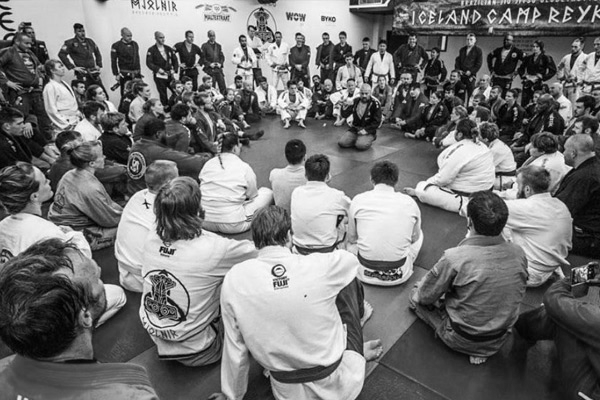
Twice a year we host major camps, in the spring and fall, with 300–500 participants. They’re part training, part education, and part celebration. We bring guest instructors, motivational speakers, and even vendors from the martial-arts industry. I always have a goal in sight to make sure that people have a uniquely memorable experience. The motto of my seminars is: I don’t want you to be the same once we’re done. It feels like a family reunion with gis. I also host weekly Zoom calls with affiliates around the world. We review monthly lesson plans, discuss teaching methods, and troubleshoot challenges together. It keeps everyone connected and accountable.
Dr. Greg Moody
That’s impressive!
Carlos Machado
Thank you. My belief is simple: a rising tide lifts all boats. When my affiliates succeed, we all succeed.
“You can’t plant a tree and walk away; you must water it every day.”
Carlos Machado
Dr. Greg Moody
You’ve coached world champions and complete beginners. How do you adjust for different kinds of students?
Carlos Machado
I see Jiu-Jitsu as a puzzle with three parts: position, objective, and transition. First, you identify where you are. Second, you understand what you want. Third, you find the safest way to get there. That framework works for anyone.
Control always comes before submission. Beginners chase taps; experts chase control. True power is calmness. I’ve shown 110-pound women how to neutralize 400-pound men through positioning and leverage. Jiu-Jitsu is physics and patience.
I’m a believer that growth happens in small increments. That’s how you really sustain long-term growth. Beginners have a leap — they learn one little thing and it’s a revelation. But as you build up your knowledge, things get smaller. It’s not so much about what you know as: are you patient? Are you taking your time? Are you securing that position first before you go? Are you anticipating?
I teach the Rule of Three: for every move, imagine three outcomes — best case, worst case, and something in between. If you can adapt among those, you can thrive anywhere, in combat or in business.
Dr. Greg Moody
That’s universal wisdom.
Carlos Machado
Exactly. I once spoke to corporate attorneys about negotiation using Jiu-Jitsu principles: never meet force with force, redirect it. The art is problem-solving under pressure, and that’s life.
Dr. Greg Moody
Many of our readers come from Taekwondo, Karate, or Krav Maga. How can they benefit from your system?
Carlos Machado
Traditional schools already excel at structure, discipline, and kids’ programs. Jiu-Jitsu complements that beautifully. It brings a new adult audience and keeps existing students longer.
It also protects culture. Too often a school brings in an outside Jiu-Jitsu instructor who builds a following and leaves, taking students with him. By learning the Machado Method, the owner controls the curriculum and the culture. I’ll show you my structure, my system, the ranking progression, the chart, the timelines, the lesson plans, and all the things you need to know.
One of my affiliates, a Taekwondo master in South Carolina, began as a white belt in Jiu-Jitsu. Some people mocked him online: “How can you teach Jiu-Jitsu as a white belt?” Within four months he had eighty Jiu-Jitsu students, more than the black belt who criticized him. He followed the system, stayed humble, and succeeded. For Jiu-Jitsu schools, the reverse is true. They often lack the structure that traditional arts have. When they adopt those systems, they become unstoppable.
Dr. Greg Moody
You’ve also done powerful work with veterans and law enforcement. Tell us more.
Carlos Machado
I’ve partnered with organizations like AHERO and We Defy Foundation. We use Jiu-Jitsu to help veterans deal with PTSD and reintegration. About a quarter of my students are former military. On the mat, rank and background disappear. You’re just another teammate, sweating and improving. That sense of belonging heals.
With law enforcement, our focus is control and restraint — minimal force, maximum safety. We teach officers to de-escalate without striking. It’s about keeping both officer and citizen safe while reducing liability for departments. The challenge is time. Most academies give new officers only a few days of defensive-tactics training. You can’t master control in three days. So, we give them principles they can retain: balance, posture, and distance management. It’s deeply rewarding when officers tell me, “That one move saved my life.”
Dr. Greg Moody
Where do you see Jiu-Jitsu heading in the next decade?
Carlos Machado
It’s expanding faster than ever. You have so many different areas — the competition, the self-defense, the lifestyle, the niches like law enforcement, military training, mental health, and therapeutical use of it. It’s so vast, but growth brings challenges. The biggest danger is lack of business understanding, and what system is going to be in place for the businesses to remain solid.
During the pandemic, I saw dozens of schools close because they had no systems. In Texas, we reopened sooner, and those with structure survived. Passion is essential, but passion without organization is chaos. The new generation must learn marketing, communication, and leadership. If they combine business acumen with martial-arts integrity, the art will flourish for centuries.
I think the market has been more unforgiving, because there are more schools everywhere. There is more marketing knowledge available. If you don’t use it, you are the one who will lose. It’s not a race to see who gets ahead, it’s a race to see how long those who are not trying to upgrade themselves are going to last if they don’t invest in their education and implement what they need to in order to make their businesses better.
Dr. Greg Moody
So, if they don’t continuously grow, they’re probably going to die. What is your top advice for school owners?
Carlos Machado
Invest in your education — not just on the mat but learn how to run a business. Study leadership. Hire mentors. If you stop learning, you start dying. There’s also a mindset issue I call the poverty mentality — the belief that making money means you’ve betrayed the martial arts. That’s nonsense. Financial stability allows you to help more people, build better facilities, and create careers for your team. Work hard, stay humble, and document everything: curriculum, staff procedures, marketing. Structure gives you freedom. Once systems are in place, you can delegate and focus on what you love most: teaching and inspiring.
It’s scary to go out there on your own, and it takes work and effort. I don’t know anybody who’s accomplished anything in life who didn’t have to work hard for it. It may become easier once you get there — you might have more funds to hire more people, delegate more, and create a larger scale where your presence is not as necessary — but until that happens, you’ve got to do your diligence before you get the benefits.
I remind instructors: everybody wants to live the dream, but few want to do the work. Early on, I cleaned mats, answered phones, fixed toilets — you name it. There’s honor in that. Those moments built my foundation.
“Everybody wants to live the dream, but few want to do the work.”
Carlos Machado
Dr. Greg Moody
What do you hope your legacy will be?
Carlos Machado
I hope people will say I helped them find balance, on the mat and in life. My goal isn’t to produce champions; it’s to produce better human beings. Jiu-Jitsu is a vehicle for self-discovery. When students realize that control doesn’t mean domination but understanding — that’s victory.
I also want my instructors to outgrow me. If the next generation surpasses what we built, that’s success. The art should evolve. We’re custodians, not owners, of Jiu-Jitsu.
Dr. Greg Moody
That’s beautiful.
Carlos Machado
Thank you. I still consider myself a student. Every seminar, every conversation teaches me something new. That humility keeps me fresh and connected.
Dr. Greg Moody
This has been incredible. Any final message for our readers?
Carlos Machado
Yes. Remember why you started. Whether you’re a white belt or a school owner with decades of experience, keep your beginner’s mind. Don’t let ego or fear stop you from learning and surround yourself with people who share your passion. Martial arts is not a solo journey; it’s a collective evolution.
I’m grateful to you, Dr. Moody, and to Grand Master Oliver for what you do, educating, guiding, and inspiring instructors. We’re all on the same mission: to use martial arts as a tool to build better communities and better people.
Dr. Greg Moody
Thank you, Master Machado. Your insights are invaluable, and your humility is inspiring.
Carlos Machado
Thank you, sir. It’s been an honor and a pleasure. I look forward to rolling again, on the mat or in conversation, anytime.
“Martial arts is not a solo journey; it’s a collective evolution.”
Carlos Machado
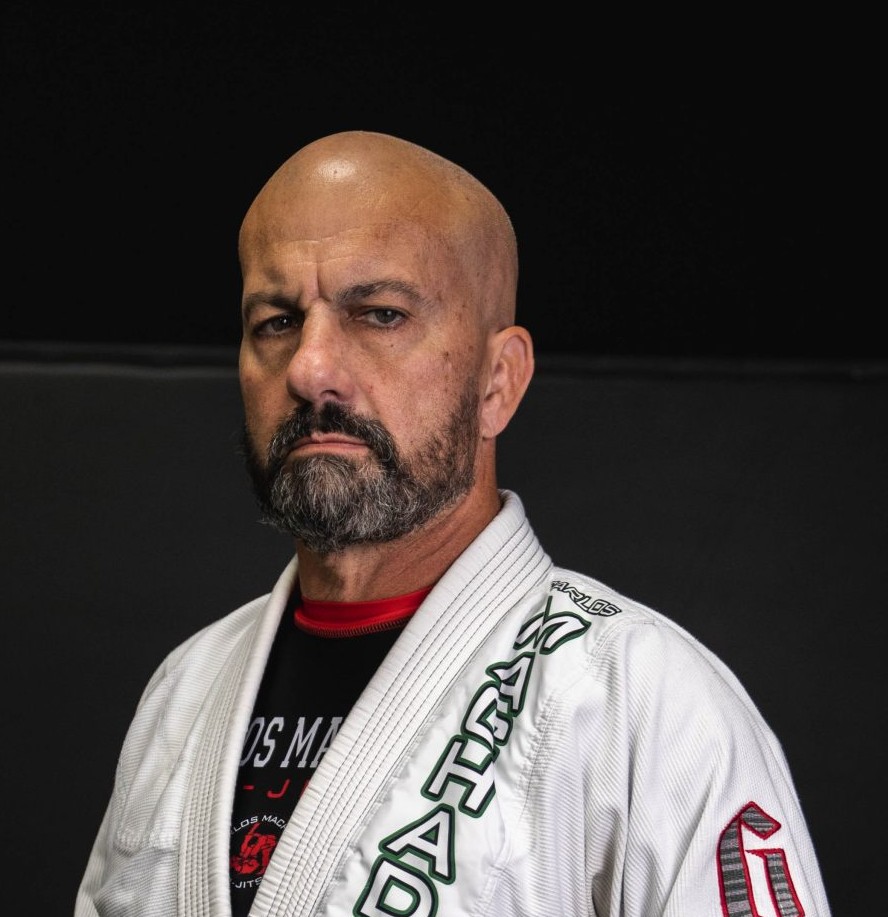
Carlos Machado is one of the most influential pioneers of Brazilian Jiu-Jitsu in North America. A member of the legendary Machado family, he trained alongside his Gracie cousins and helped introduce Brazilian Jiu-Jitsu to the United States in the early 1990s. Known as the “Godfather of Brazilian Jiu-Jitsu” in America, he blends strong traditional fundamentals with modern innovation, making the art effective and accessible to practitioners of all levels.
A multiple-time Pan American and World Champion, Carlos has coached thousands of students worldwide, including elite competitors, law enforcement professionals, and celebrities. An 8th Degree Coral Belt, he is the founder of the Carlos Machado Jiu-Jitsu Association and continues to empower students through confidence, discipline, and resilience.