When people first start Brazilian Jiu Jitsu, they assume improvement comes from toughness, athleticism, or natural talent. They watch experienced students roll effortlessly and believe those people simply have it — some innate grappling ability others lack.
But after enough years on the mat, one truth becomes impossible to ignore. The students who become great are not the most talented. They are the most consistent. Not the person who trains obsessively for three weeks. Not the person who only shows up when motivation is high. Not the person who studies the most techniques. The person who improves the most is the one who keeps showing up.
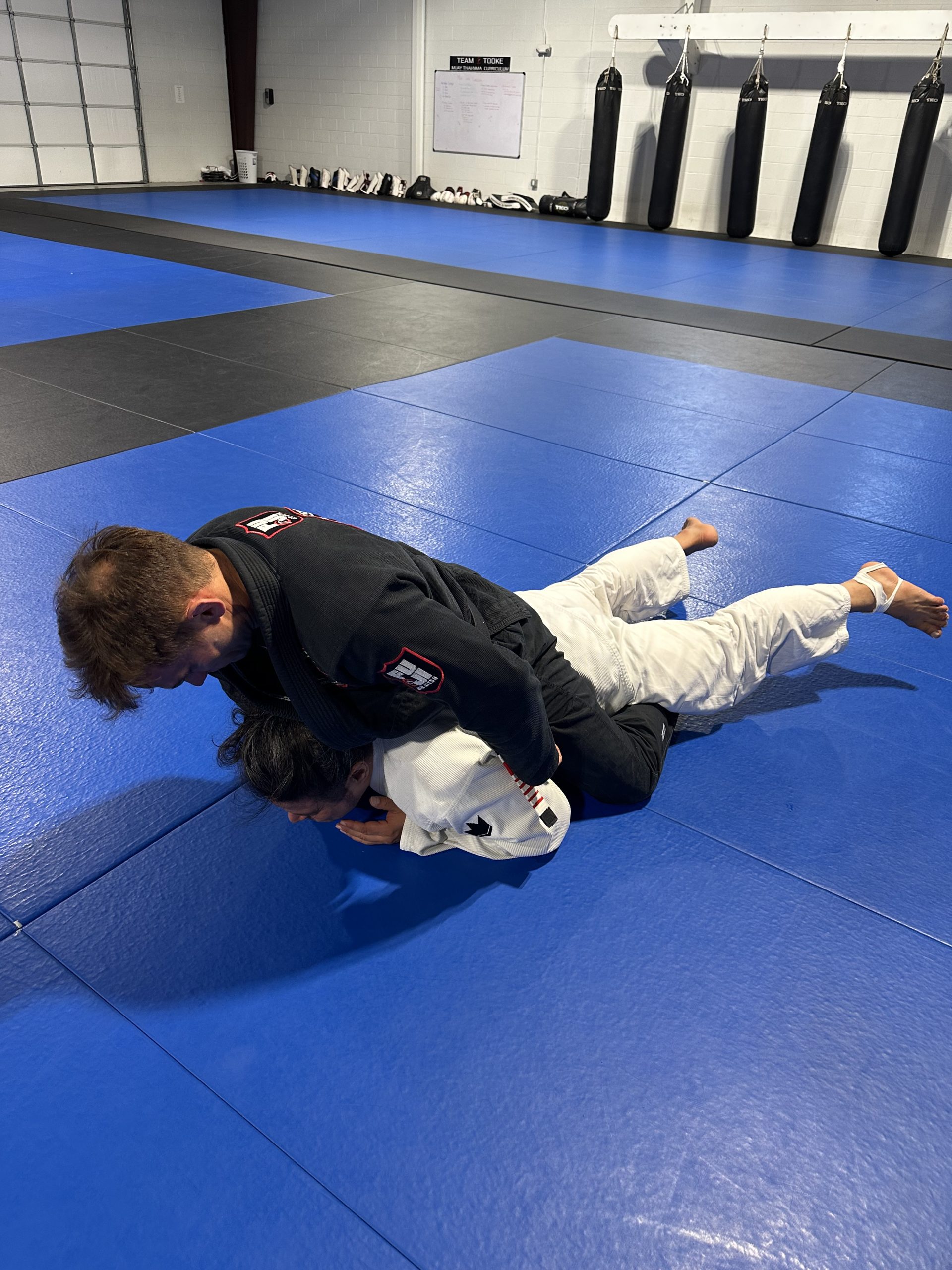
Jiu Jitsu Is Compound Interest for the Brain
Every class deposits a tiny amount of skill into your nervous system. One class equals understanding. Ten classes equals familiarity. Fifty classes equals timing. Hundreds of classes equal instinct. You cannot shortcut instinct.
A beginner learning the hip escape thinks through each step. Months later, they do not “do” the movement. Their body automatically moves when pressure appears. The same transformation happens with guard retention, posture inside closed guard, breaking grips, timing sweeps, and finishing chokes.
You do not get better because you learned a technique. You get better because you have encountered the same problem hundreds of times. Consistency creates recognition. Recognition creates speed. Speed creates effectiveness.
“Nothing dramatic happened. No breakthrough seminar. No secret move. They simply did not quit.”
Travis Tooke
A Story Seen Hundreds of Times
I have had countless students who started off very slowly and seemingly were not making any progress for several weeks. They struggled with coordination, timing, and confidence. If improvement were judged early, many would have been labeled “not naturally good at Jiu Jitsu.”
Today, many of those same students are world-class black belts. Nothing dramatic happened. No breakthrough seminar. No secret move. They simply did not quit.
The Development Timeline
White Belt — Survival Stage. You learn positions such as mount, guard, and side control. Your goal is to understand what is happening.
Blue Belt — Recognition Stage. You start seeing problems before they happen. You escape earlier, not just harder.
Purple Belt — Anticipation Stage. You predict reactions and guide opponents into mistakes. Technique becomes connected rather than isolated.
The timeline is not defined by talent. It is defined by exposure.
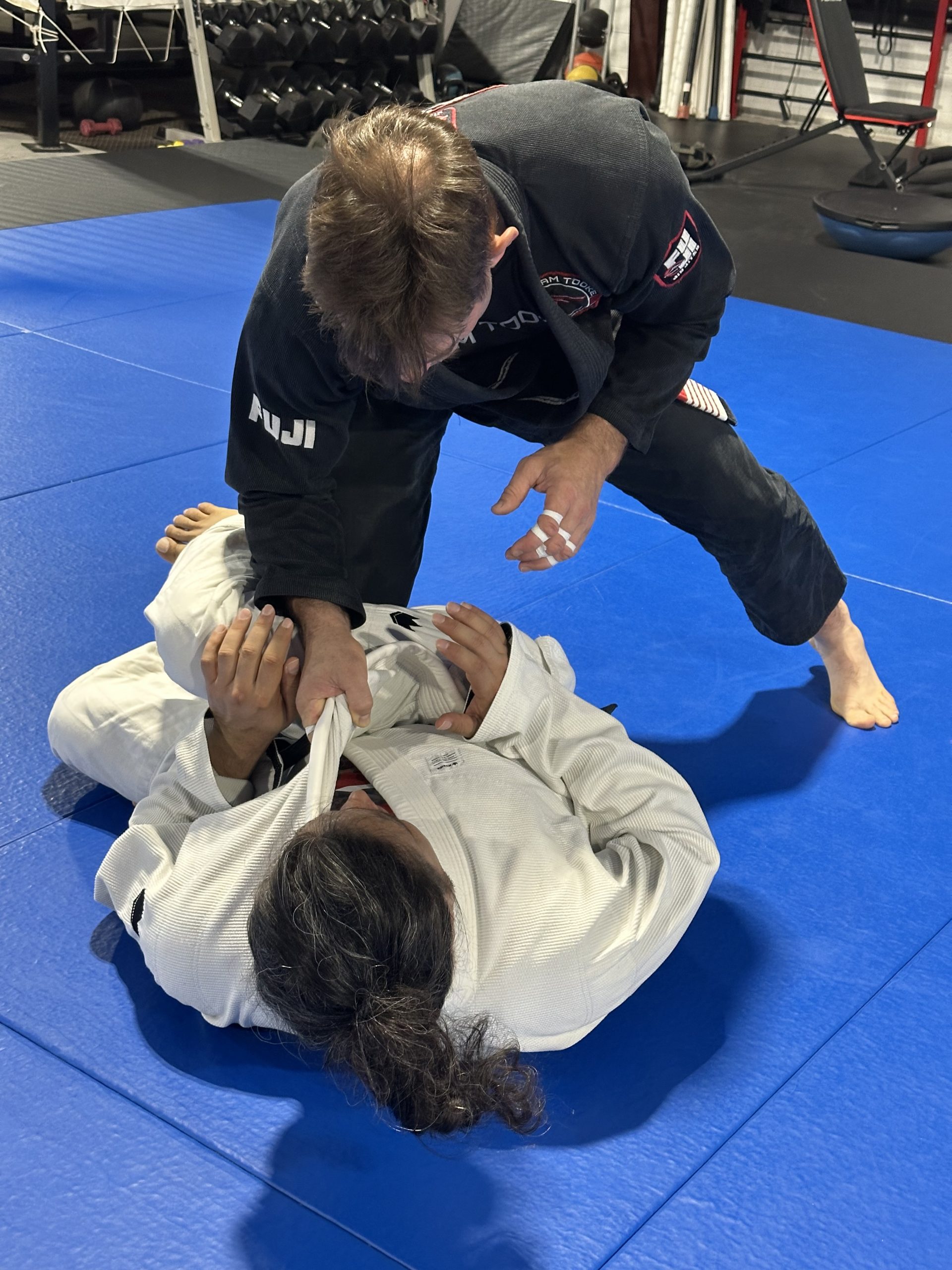
Why Inconsistency Feels Like Starting Over
Brazilian Jiu Jitsu is not memorization. It’s reaction speed. Your brain prunes unused pathways. Long breaks dull timing more than forgetting moves. Training five days a week for a month, then stopping, resets adaptation. Training two or three days every week for years transforms you. The more the better, but two to three times per week consistently beats eight to ten times a week followed by long absences. Frequency builds wiring, and intensity only stresses it.
This Law Applies Everywhere
Jiu Jitsu simply reveals a universal rule of mastery. In music, daily fifteen-minute practice beats weekend marathons — fingers adapt to repetition. In fitness, regular moderate training builds strength faster than rare extreme workouts. In language learning, five minutes every day creates fluency faster than occasional studying. In business and leadership, small daily improvements outperform bursts of motivation. Momentum always beats intensity.
“It is not about being better than anyone else in class. It is about being better than who you were yesterday.”
Travis Tooke
What Consistency Really Builds
Consistency does not just build technique. It builds perception. You stop thinking about escaping mount, you feel balance shifts before sweeps, and you defend submissions before they tighten. This is unconscious competence, and it only comes from repetition over time.
For Parents
In the beginning, avoid focusing on wins, taps, or performance comparisons. Instead, support effort, attitude, and teamwork. Early results vary widely, but over time, results are virtually guaranteed when a student is consistent. Confidence, resilience, and discipline grow naturally from repeated participation, not immediate success.
A Challenge
Commit to consistency, not motivation. Pick a schedule you can maintain, even when tired, busy, or unmotivated, and follow it for six months. Do not evaluate yourself after a class, and do not evaluate yourself after a week. Evaluate after a season. If you follow this, you will not just become better at Jiu Jitsu — you will understand how mastery in anything is actually built.
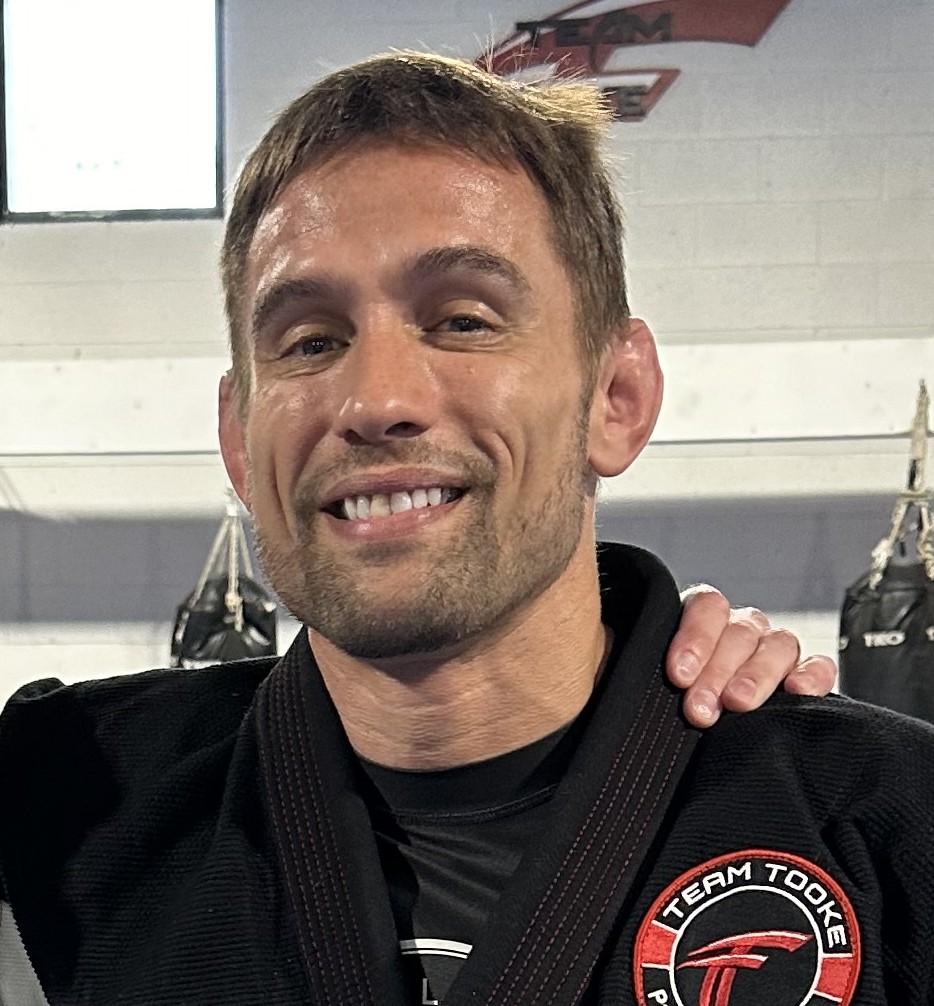
For over 20 years, Travis Tooke has dedicated himself to mastering and teaching the art of Brazilian Jiu-Jitsu. He is a passionate martial artist committed to serving his students and his community. He is the author of Jiu Jitsu and Life: Lessons Learned On and Off the Mat and Warrior Crucible. As the head instructor and CEO of Team Tooke Mixed Martial Arts, Professor Tooke has created a program that molds students into athletic martial artists and confident leaders.