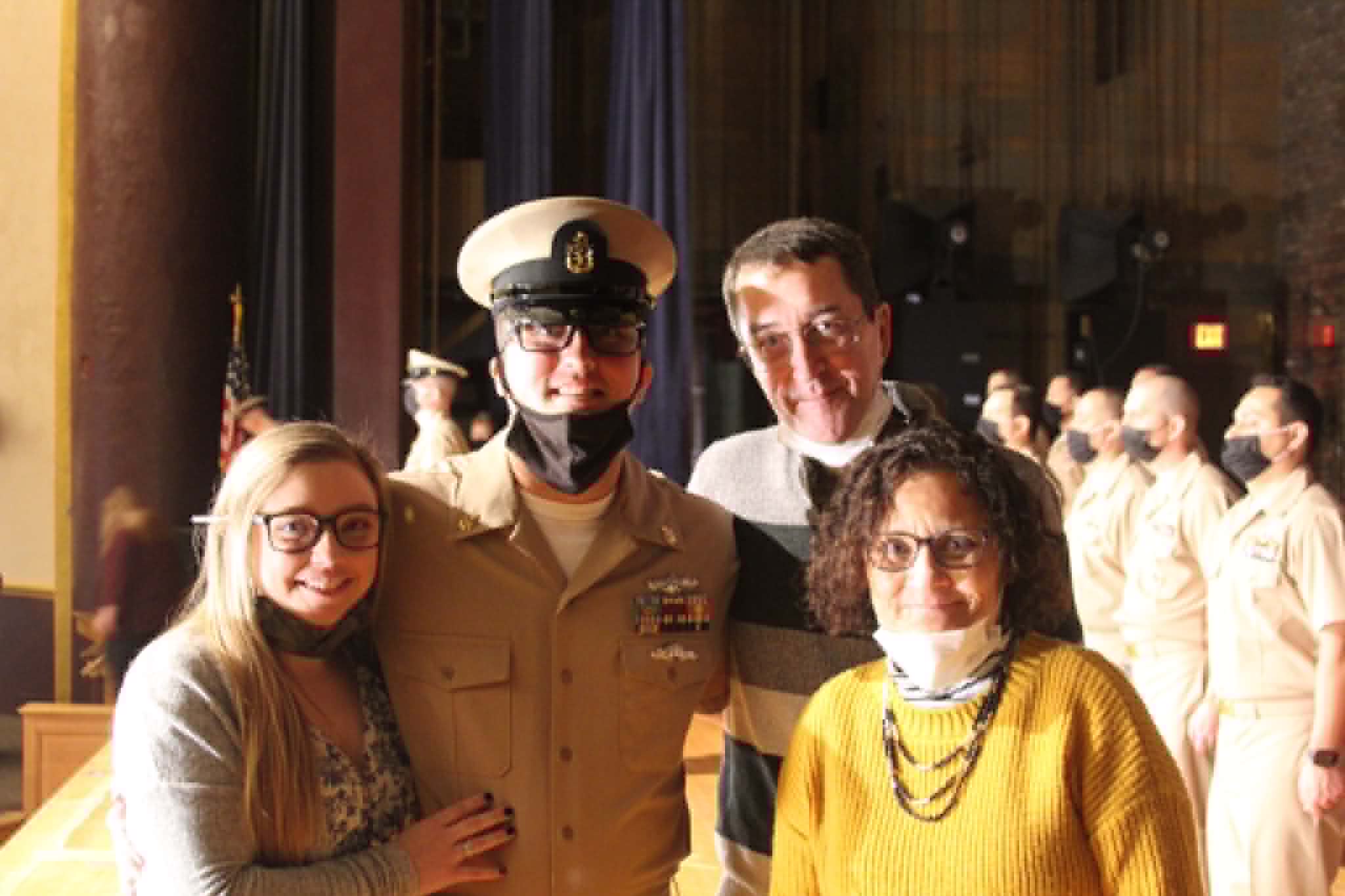
Kaleb Rhoads signed his name on a Navy contract in September 2007. By April 2008, he was in boot camp. That decision changed everything, and he knew it would.
He didn’t ease into service. He climbed through it, eventually earning the rank of Navy Chief Petty Officer. Dual warfare qualified. That credential requires proving yourself across multiple combat specialties. It takes years of grinding, sleepless nights, and a refusal to stop when things get hard.
But Kaleb’s story doesn’t start in 2007. It starts in 1995, on a martial arts mat.
A Childhood on the Mat
He joined the American Taekwondo Association as a kid. His dad was already in it. His first instructors were Tina and Jeff Newberry, and Kaleb remembers watching Tina break boards on Regis and Kathy Lee, twice, chasing a world record. That image never left his mind. Power Rangers helped too. It was the 90s.
He stepped away from the mat when the Navy called. The military came first, and it took fifteen years before he returned as an instructor. Today he holds a fourth-degree black belt, a Level 3 Black Collar instructor certification, and a Krav Maga instructor credential he’s held since 2017.
Military Bearing, on Base and on the Mat
Both worlds share the same core demand: military bearing. The Navy calls it that. The mat has its own version. How you carry yourself, your posture, your eye contact, your calm under pressure. Kaleb teaches this to his students because it works outside the dojo. Predators look for soft targets. They scan for distracted eyes and slumped shoulders. Standing well is a deterrent before anyone throws a punch.
The Navy also taught him to use his voice first. In law enforcement and security roles, the tension was real. But his training kept him clear-headed. You talk the situation down. You deescalate. Physical force is the last tool, not the first.
Kaleb Rhoads | Navy Chief Petty Officer & Instructor
Fast, Effective, Practical
His approach to technique is blunt. He asks three questions about everything he teaches: Is it fast? Is it effective? Is it practical? If it fails any of those, it doesn’t make the cut. He has no patience for moves that look impressive in a gym but collapse in real conditions.
Training with other service members hits different. Civilians on the mat bring plenty of heart. But soldiers and sailors understand viscerally why they’re sweating. The intensity goes up. During military courses, Kaleb could immediately spot who had trained outside standard base curriculum. They moved differently. The leverage was there. The confidence was there.
What the Mat and the Navy Have in Common
He credits martial arts with helping him carry the weight of long deployments and demanding jobs. The discipline and the patience you build on a mat translate. You learn that nothing real gets built fast. A Chief Petty Officer takes years. A black belt takes years. Both require the same stubborn persistence.
What Comes Next
Retirement is a couple of years out. The uniform will eventually go in a box. But the values won’t. He’s planning to bring his kids onto the mat. He wants them to feel what structure does to a person, what respect does, what perseverance does when obstacles appear.
He keeps two quotes close. Marcus Luttrell: Never quit. And from ATA founder H.U. Lee: Today not possible, tomorrow possible.